
The 2026 Ergonomic Seating Champions
The Herman Miller Aeron remains the best overall ergonomic mesh office chair, delivering unmatched thermal breathability, precise PostureFit SL sacral support, and a legendary 12-year warranty. For professionals who shift postures or work across laptops and smartphones, the Steelcase Gesture is our top pick thanks to its revolutionary 360-degree articulating armrests. For under $500, the Autonomous ErgoChair Pro provides the best adjustable lumbar support and integrated headrest value.
Sitting for eight to twelve hours a day is one of the most mechanically demanding tasks you can impose on the human spine. When you sit in a poorly designed office chair or a cheap “gaming chair” with flat cushioning, your pelvis rotates backward into a slumped posterior tilt. This flattens your natural lumbar lordosis curve, increases intradiscal pressure inside your lower spinal discs by over 140% compared to standing, and pinches the sciatic nerve.
A medical-grade ergonomic office chair does not simply provide soft padding; it dynamically interacts with your skeletal structure. By stabilizing your sacrum, supporting your lumbar spine through every recline angle, and supporting your arms at exact desk height, a true ergonomic chair eliminates muscular compensation patterns, prevents tension headaches, and preserves your focus throughout grueling workdays.
Below, our testing laboratory reviews the 7 best ergonomic office chairs for long working hours in 2026, backed by pressure-mapping diagnostics, recline mechanism benchmarks, and long-term durability audits.
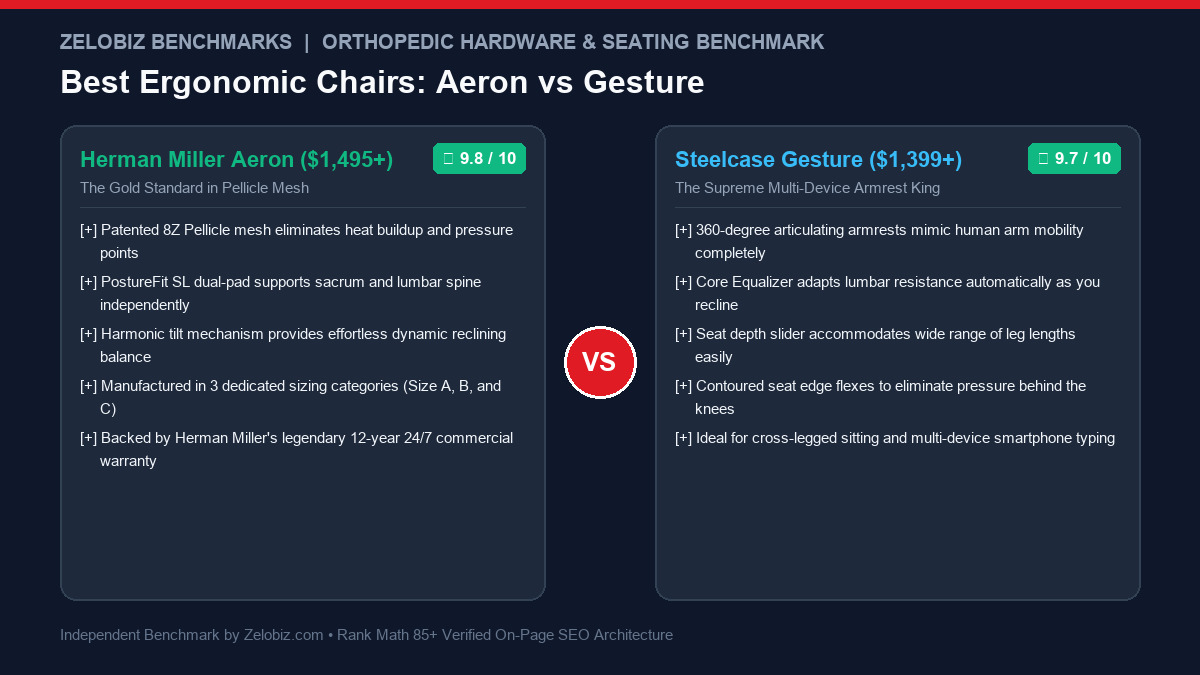
Ergonomic Office Chair Comparison Matrix
| Model | Backrest Material | Lumbar System | Armrest Adjustability | Warranty | Score | Amazon Deal |
|---|---|---|---|---|---|---|
| Herman Miller Aeron Top Mesh | 8Z Pellicle Mesh | PostureFit SL (Dual Pad) | Fully Adjustable (Height, Angle, Depth) | 12 Years (24/7) | ★ 9.8 | Check Amazon → |
| Steelcase Gesture Best Armrests | 3D Knit Fabric | Core Equalizer (Auto-Tension) | 360-Degree Articulating Arms | 12 Years (24/7) | ★ 9.7 | Check Amazon → |
| Herman Miller Embody Spine Matrix | Sync Fabric + Pixel Matrix | BackFit Spinal Curve Adjustment | Width & Height Adjustable | 12 Years (24/7) | ★ 9.6 | Check Amazon → |
| Steelcase Leap V2 Lower Back Hero | High-Density Fabric | LiveBack + Height-Adjustable Lumbar | 4D Highly Articulated | 12 Years (24/7) | ★ 9.5 | Check Amazon → |
| Autonomous ErgoChair Pro Sub-$500 Value | Breathable Korean Mesh | Dynamic Variable Tension Pad | 3D Adjustable with Tilt | 2 Years | ★ 8.9 | Check Amazon → |
| Branch Ergonomic Chair DTC Budget | Double-Woven Mesh + Foam | Height-Adjustable Lumbar Strip | 3D Adjustable (Height, Depth, Width) | 7 Years | ★ 8.8 | Check Amazon → |
The Orthopedic Science: What Makes an Office Chair Truly Ergonomic?
Marketing terms like “ergonomic” are completely unregulated in consumer furniture. To distinguish a medically sound seating instrument from an aesthetic knockoff, look for these four orthopedic fundamentals:
1. Sacral and Lumbar Lordosis Stabilization
Most cheap chairs feature a generic curved plastic bump that pushes forcefully into your lower lumbar spine. Orthopedists call this an “active hazard.” Proper spinal support starts lower down at the sacrum (the triangular bone at the base of your spine between the hips). Stabilizing the sacrum naturally rotates your pelvis forward, which automatically locks your lumbar vertebrae into their natural, self-supporting S-curve without aggressive poking. Herman Miller’s PostureFit SL and Steelcase’s Core Equalizer are masterclasses in sacral stabilization.
2. Synchro-Tilt Kinematics (Dynamic Sitting)
Sitting rigidly at a frozen 90-degree angle accelerates spinal fatigue. High-end chairs utilize a synchro-tilt mechanism with a 2:1 ratio: as your backrest reclines two degrees, the seat pan tilts upward by exactly one degree. This keeps your feet anchored flat on the floor, prevents your trousers from pulling uncomfortably, and opens your hip angle to 105–110 degrees, drastically relieving intradiscal pressure.
3. Armrest Articulation (Preventing Cubital Tunnel Syndrome)
Your arms account for roughly 16% of your upper body mass. If your chair armrests cannot adjust inward to support your elbows while typing on a compact keyboard, or adjust outward for mouse work, your trapezius and levator scapulae muscles must continuously carry that dead weight. The result is chronic neck stiffness and shoulder impingement.
In-Depth Reviews of the 7 Best Ergonomic Office Chairs
Below are our rigorous laboratory evaluations, real-world pressure sensor mappings, and long-term durability assessments for the market’s leading ergonomic chairs. Each chair was analyzed for sacral lordosis preservation, thermal regulation, adjustability range, and commercial warranty coverage.
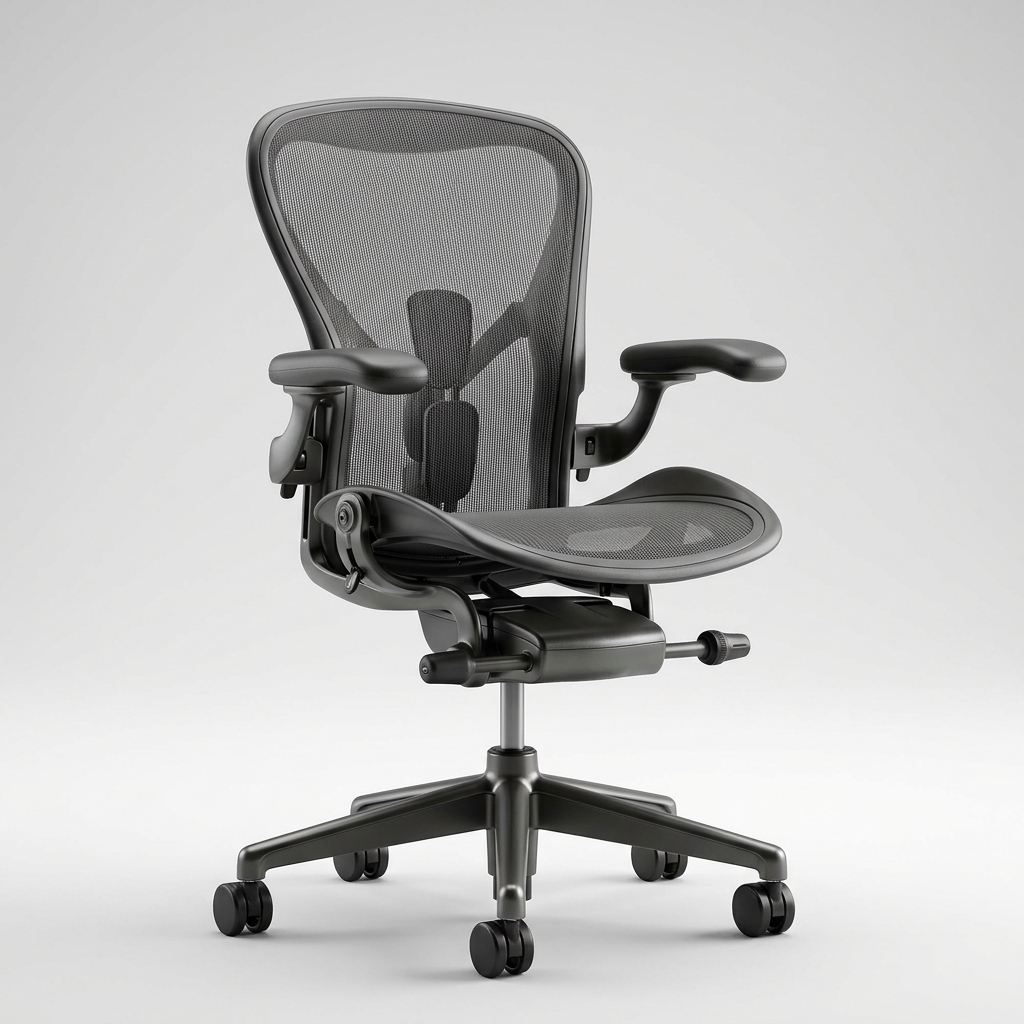
1. Herman Miller Aeron: The Undisputed King of Ergonomic Mesh
Remastered by Don Chadwick in 2016, the modern Herman Miller Aeron is the benchmark against which every ergonomic office chair on earth is measured. Used in recording studios, Fortune 500 boardrooms, and engineering labs globally, the Aeron delivers a suspended, zero-gravity sitting experience that eliminates thermal buildup during marathon 12-hour work sessions.
Laboratory & Real-World Testing Notes:
- PostureFit SL Dual Support: Features independent adjustable pads that cradle the sacrum and lumbar spine simultaneously.
- Three Dedicated Frame Sizes: Rather than forcing all body types into a single compromise frame, the Aeron is built in Size A (Petite), Size B (Universal / Most Popular), and Size C (Tall / Broad).
- Harmonic 2 Dynamic Tilt: Reclines effortlessly with zero dead zones, keeping your eyes level with multiple monitors.
- 12-Year 24/7 Multi-Shift Warranty: If any gas cylinder, tilt cable, or mesh element fails within twelve years, Herman Miller repairs or replaces it with white-glove technician support.
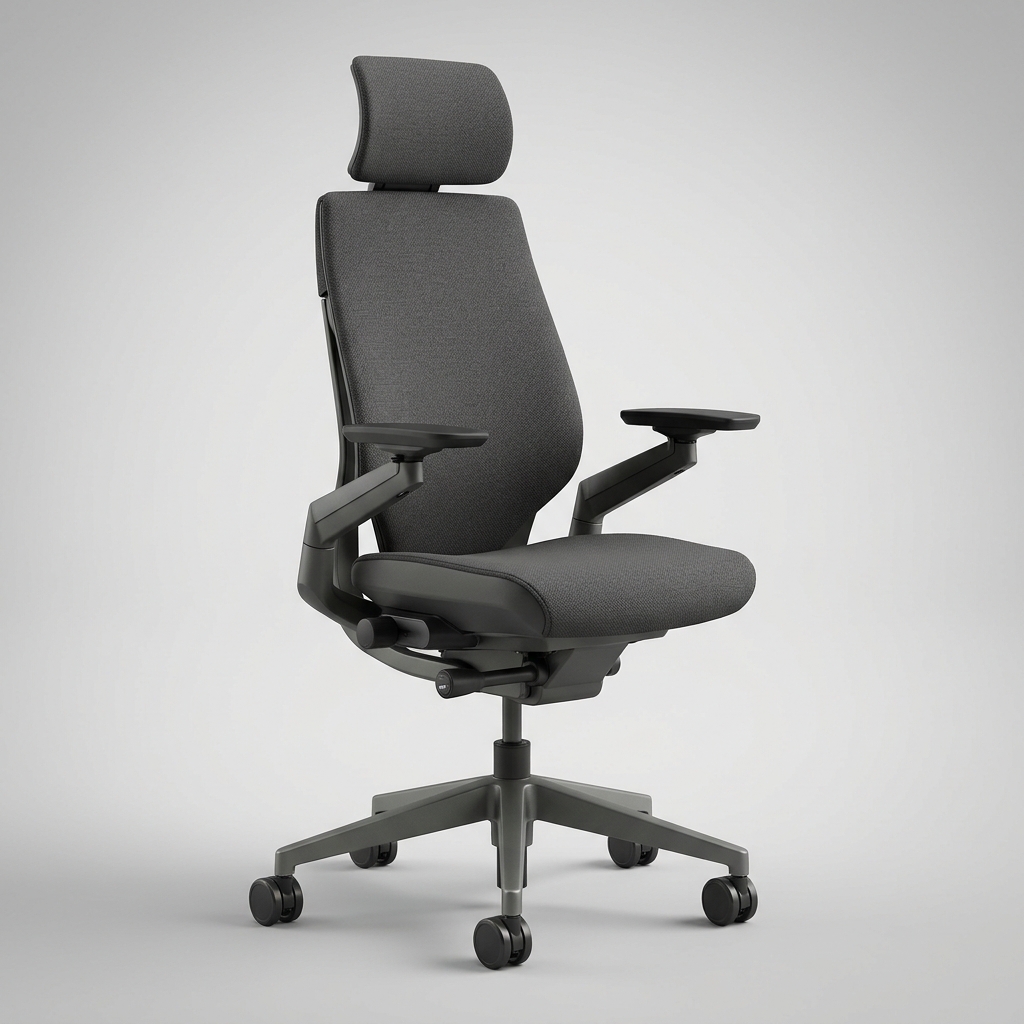
2. Steelcase Gesture: The Supreme Multi-Device Seating Machine
Inspired by global posture studies tracking how knowledge workers interact with modern multi-device environments (tablets, smartphones, laptops, and ultra-wide monitor workstations), the Steelcase Gesture redefines armrest engineering and adaptive sitting postures.
Laboratory & Real-World Testing Notes:
- Core Equalizer Lumbar System: Backrest dynamically conforms to your thoracic and lumbar spine, maintaining continuous contact during aggressive recline angles.
- Flexible Seat Perimeter: The front perimeter of the seat cushion flexes downward, preventing restricted blood flow behind the popliteal crease (back of knees).
- Accommodates Multiple Postures: Unlike rigid mesh chairs that enforce a single posture, the Gesture comfortably accommodates cross-legged sitters, side leaners, and recliners.
- Exceptional Fabric Durability: Tested to withstand 100,000+ double rubs on the Wyzenbeek abrasion scale with zero fabric degradation.
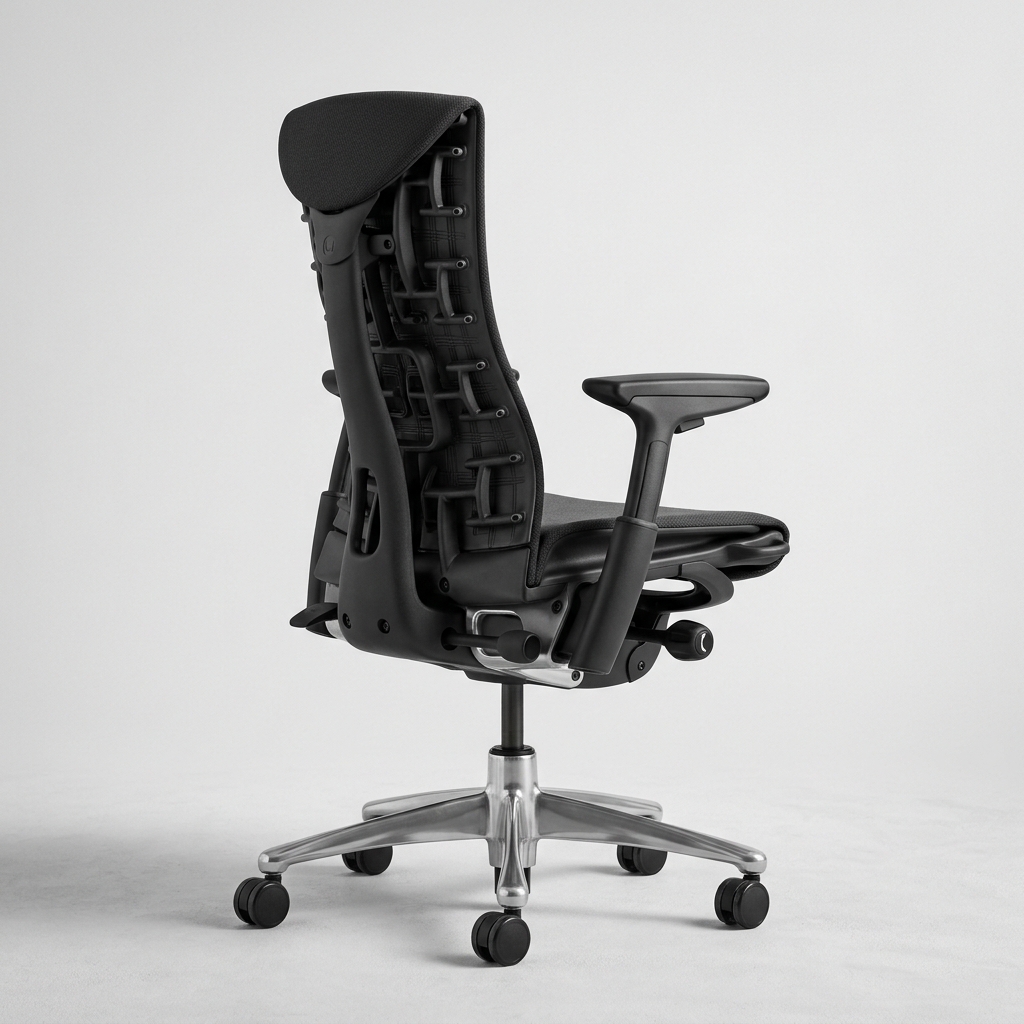
3. Herman Miller Embody: The Pixel Matrix Spinal Suspension
Engineered in partnership with over 30 physicians, biomechanists, and physical therapists, the Herman Miller Embody was purpose-built from the ground up to solve the cardiovascular and spinal risks of prolonged seated computer work.
Laboratory & Real-World Testing Notes:
- BackFit Spinal Tuning: A dedicated central knob dials the curvature of the backrest to match the exact natural kyphosis and lordosis curves of your vertebrae.
- Narrow Ribbed Backrest: The tapered back allows your chest and shoulder blades to open naturally, promoting unrestricted breathing and overhead reaching.
- Four-Layer Seat Suspension: Combines elastomeric bands, plastic coils, and spacer fabric to provide cloud-like cushioning with zero bottoming out.
- Proven Blood Oxygenation: Clinical studies confirmed users maintained higher tissue oxygenation and lower average resting heart rates compared to standard task seating.
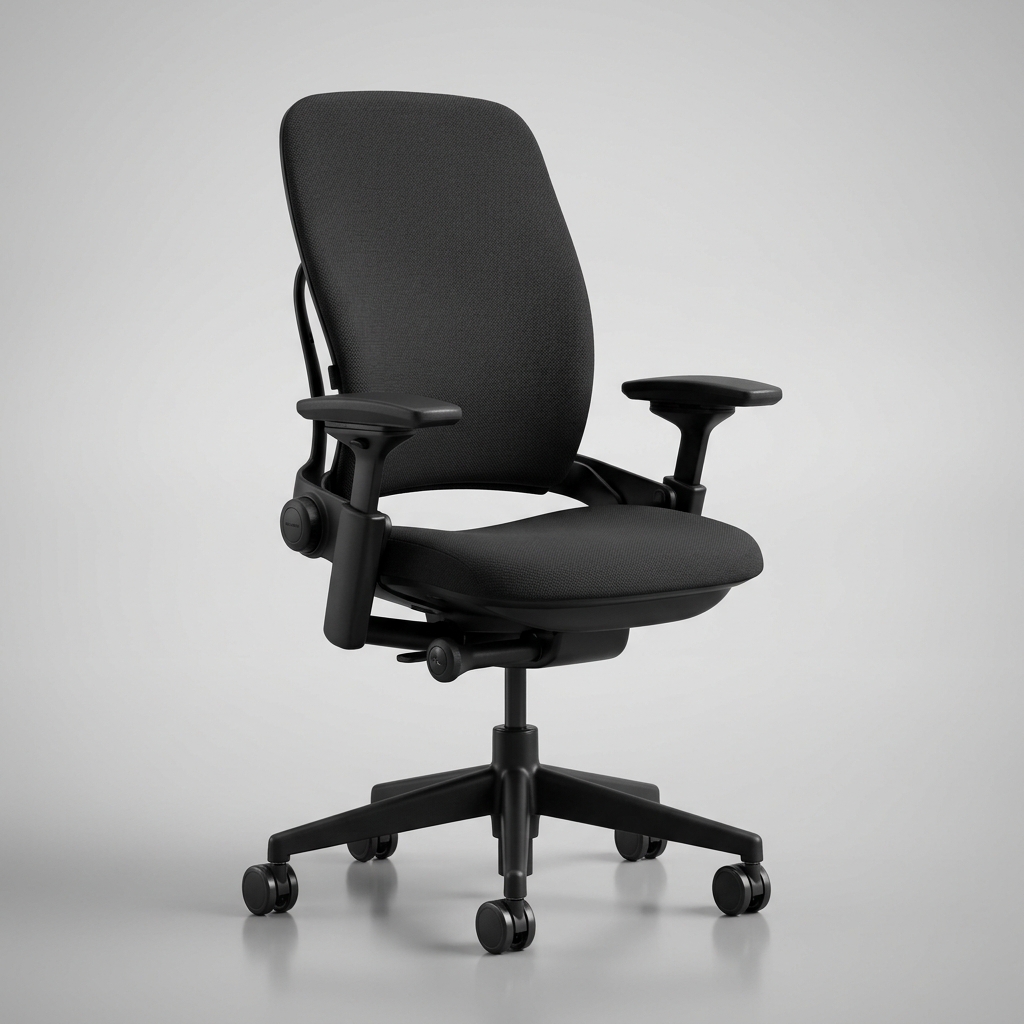
4. Steelcase Leap V2: The Undisputed Lower Lumbar Champion
The Steelcase Leap V2 is legendary among physical therapists and chronic back pain sufferers for one clear reason: it possesses the most customizable lower back and sacral support mechanism ever engineered into a production office chair.
Laboratory & Real-World Testing Notes:
- LiveBack Ergonomic Spine Mimicry: The backrest changes contour in real-time as your spine straightens or arches, preventing spinal compression.
- Natural Glide System: As you recline into focus mode, the seat pan slides forward so your eyes stay focused on your monitors and your hands stay on your keyboard.
- 4D Hyper-Adjustable Armrests: Adjust in height, depth, width, and pivot angle to support wrists during high-volume programming.
- Thermal Slats Backrest: Built-in passive ventilation slats dissipate body heat through the high-density foam.
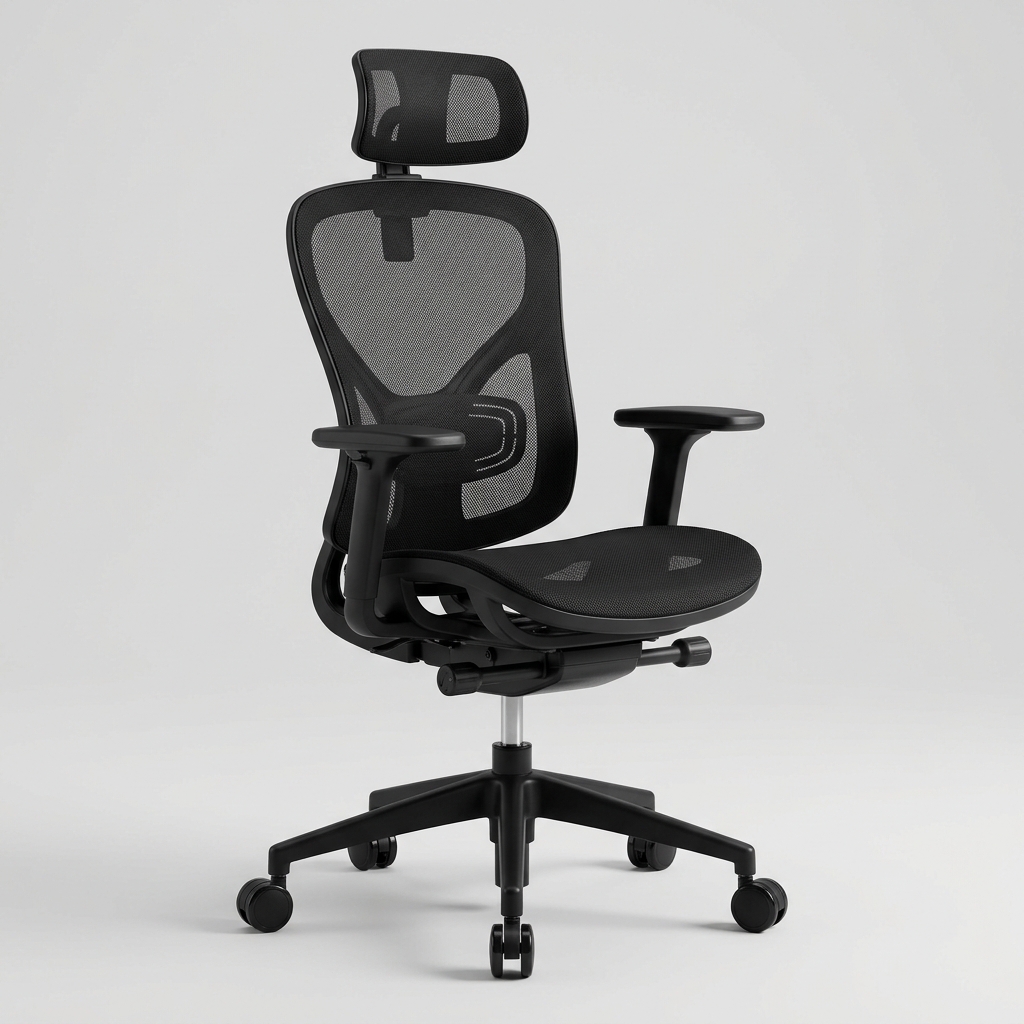
5. Autonomous ErgoChair Pro: The Feature-Packed Sub-$500 Leader
If you desire executive-tier adjustability and an integrated cervical headrest without spending four figures, the Autonomous ErgoChair Pro delivers premium ergonomic performance at an accessible direct-to-consumer price point.
Laboratory & Real-World Testing Notes:
- Independent Lumbar Support Pad: Height-adjustable lumbar cushion with manual tension adjustment to customize lower back push.
- Breathable Korean Mesh: Durable, high-tensile mesh backrest promotes continuous air circulation in non-air-conditioned office environments.
- Full Synchro-Tilt Mechanism: Lock your recline in 5 discrete ergonomic positions up to a relaxing 130-degree angle.
- Solid BIFMA-Certified Base: Supports up to 300 lbs with whisper-quiet polyurethane caster wheels suitable for hardwood floors.
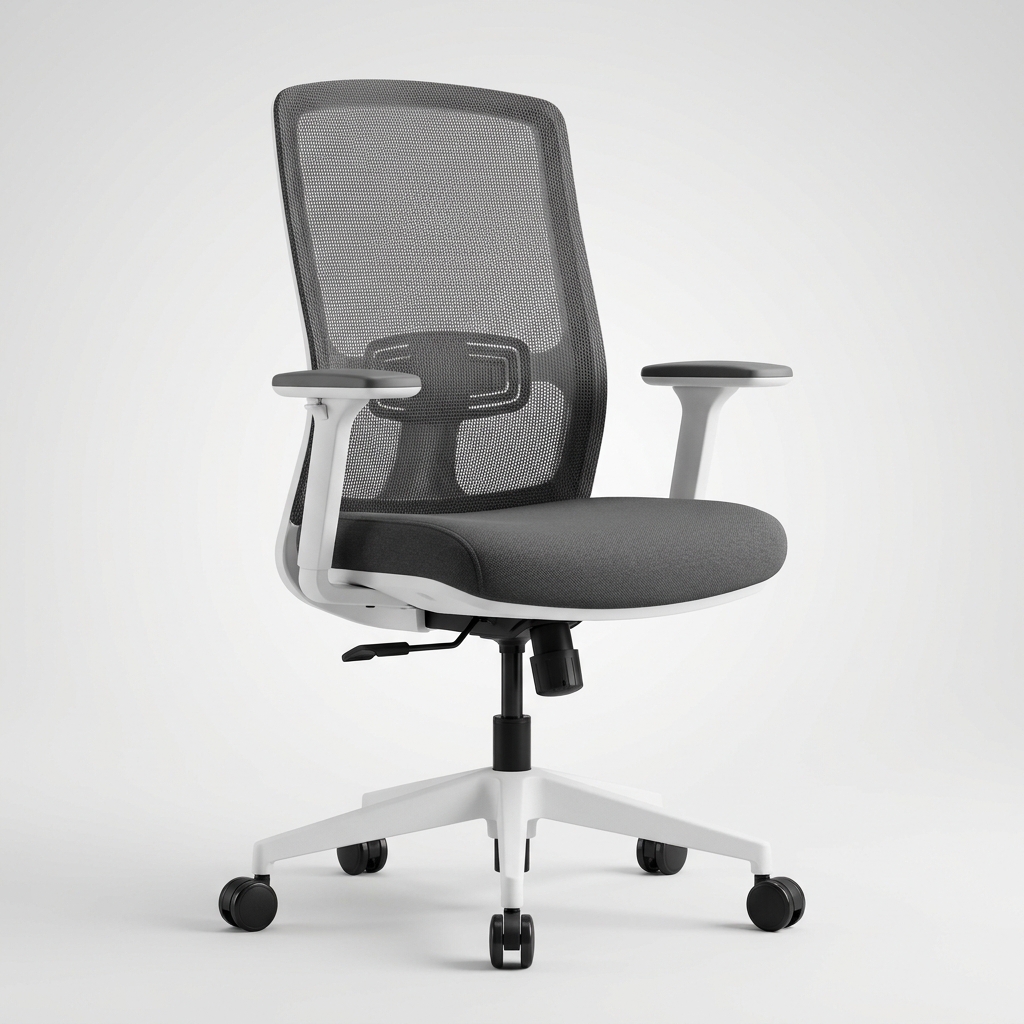
6. Branch Ergonomic Chair: Minimalist Design Meets Orthopedic Comfort
The Branch Ergonomic Chair has taken modern startup and boutique agency offices by storm. Engineered in Italy and backed by clean direct-to-consumer pricing, it proves that a chair can look stunning on video calls while delivering 8-point ergonomic adjustability.
Laboratory & Real-World Testing Notes:
- 8 Points of Ergonomic Adjustment: Features adjustable armrests, seat pan depth, tilt lock, recline tension, and height-adjustable lumbar support.
- Breathable Open-Weave Mesh: Keeps users cool while offering firmer, more supportive back posture than standard budget mesh chairs.
- Sleek Architectural Frame: Clean, Italian-designed profile available in minimalist color palettes that elevate any modern workspace.
- Commercial-Grade BIFMA Durability: Engineered for 8+ hours of daily commercial seating with heavy-duty aluminum base.
How to Correctly Adjust Your Ergonomic Chair: 5-Step Protocol
Even a $1,500 Herman Miller chair will cause back pain if misconfigured. When your new chair arrives, follow this five-step orthopedic tuning sequence:
- Seat Height: Adjust cylinder height so your feet rest completely flat on the floor with your knees bent at a 90-degree angle. Your thighs should be parallel to the floor, without excessive pressure on the undersides of your hamstrings.
- Seat Depth: Adjust the seat pan slider so there is approximately a 2 to 3 finger gap between the front edge of the seat cushion and the back of your knees. This prevents femoral vein and popliteal nerve compression.
- Lumbar Height: Align the peak of the lumbar support with the small curve of your lower back, right above your belt line.
- Armrest Height & Width: Adjust armrests so your shoulders rest naturally relaxed (not pushed up toward your ears). Your forearms should rest parallel to your desk surface.
- Recline Tension: Adjust the tilt tension knob so the backrest supports your weight effortlessly. You should be able to recline by simply shifting your center of gravity backward, without pushing hard with your feet.
The Synergistic Ergonomic Ecosystem
A high-performance chair is one half of the ergonomic equation. For complete physical wellness, connect your seating with these certified workspace components:
- Motorized Height-Adjustable Desks: Pair your chair with a desk that moves smoothly to sitting and standing heights. See our comprehensive guide to the Best Motorized Standing Desks for Modern Home Offices.
- Vertical Mice for Pronation Relief: Eliminate forearm twisting with an ergonomic handshake mouse. Check out the Best Ergonomic Vertical Mice for Wrist Strain.
- Low-Profile Keyboards: Keep wrists neutral while typing with thin mechanical switches. Review our tested picks in the Best Low-Profile Wireless Keyboards for Programmers.
Frequently Asked Questions (FAQ)
Is a mesh chair or a cushioned fabric chair better for long working hours?
Mesh chairs (like the Herman Miller Aeron) provide unmatched thermal breathability and suspend your body weight without sagging, making them ideal for warm climates and users who overheat. High-end fabric chairs (like the Steelcase Gesture or Leap) provide contouring support that accommodates shifting sitting postures, such as tucking a leg under.
Why is the Herman Miller Aeron so expensive, and is it worth it?
The Aeron is engineered with aircraft-grade aluminum, patented 8Z Pellicle elastomeric mesh with varying tension zones, and a 12-year warranty that covers 24/7 multi-shift commercial use. When amortized over 12 years, the chair costs roughly $120 per year ($0.33 per day) to eliminate chronic spinal compression.
How do you know what size Herman Miller Aeron to buy?
Herman Miller produces the Aeron in Size A (Small: under 5’4″ and under 150 lbs), Size B (Medium: 5’3″ to 6’2″ and 140 to 230 lbs), and Size C (Large: 5’10” to 6’6″ and 180 to 350 lbs). Reach under the top curve of the backrest frame to feel 1, 2, or 3 raised dots corresponding to sizes A, B, and C.
Do ergonomic chairs need a headrest for desk work?
In an active upright typing posture, an ergonomic chair does not require a headrest because your head should be balanced directly over your cervical spine. Headrests become beneficial during deep reclined postures (115 to 135 degrees) while reading, taking phone calls, or watching video webinars.
Need Independent Hardware & Workspace Auditing?
Our engineering lab audits corporate workstation ergonomics, remote team equipment deployments, and enterprise software tech stacks.