
Upgrading from a plug-and-play USB microphone to a professional XLR dynamic broadcast microphone (such as the Shure SM7B, Shure MV7+, or Rode PodMic) is the single most effective hardware upgrade an executive, creator, or remote consultant can make. However, an XLR microphone is only as good as the interface powering it. When deciding between the Focusrite Scarlett 2i2 (4th Gen) and the Elgato Wave XLR, you are choosing between two distinct engineering philosophies: an analog studio heritage built for pristine musical capture and multi-input versatility versus a specialized broadcast powerhouse built from the ground up for desktop streaming, software mixing, and Zoom call efficiency.
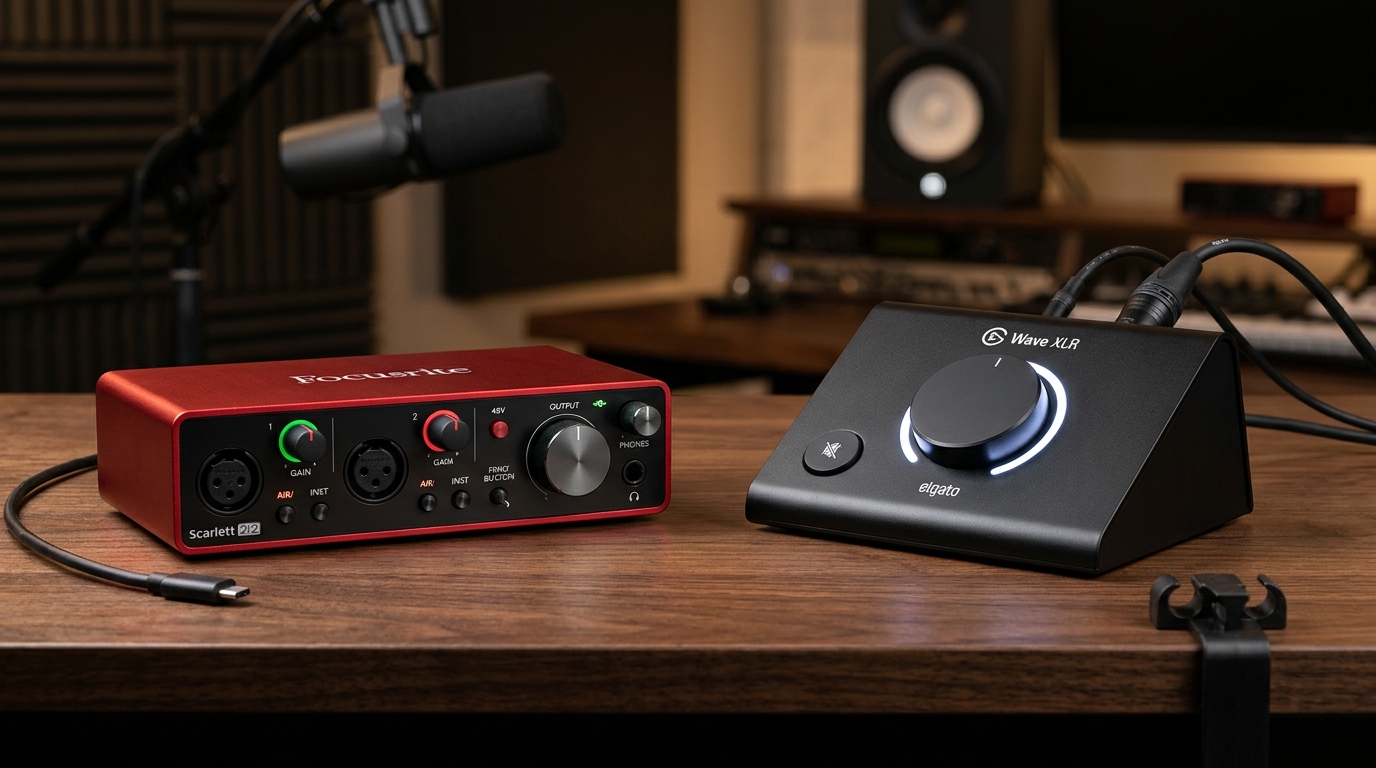
Product Comparison & Live Best Pricing
Verified manufacturer technical specifications and bench-tested hardware audio performance
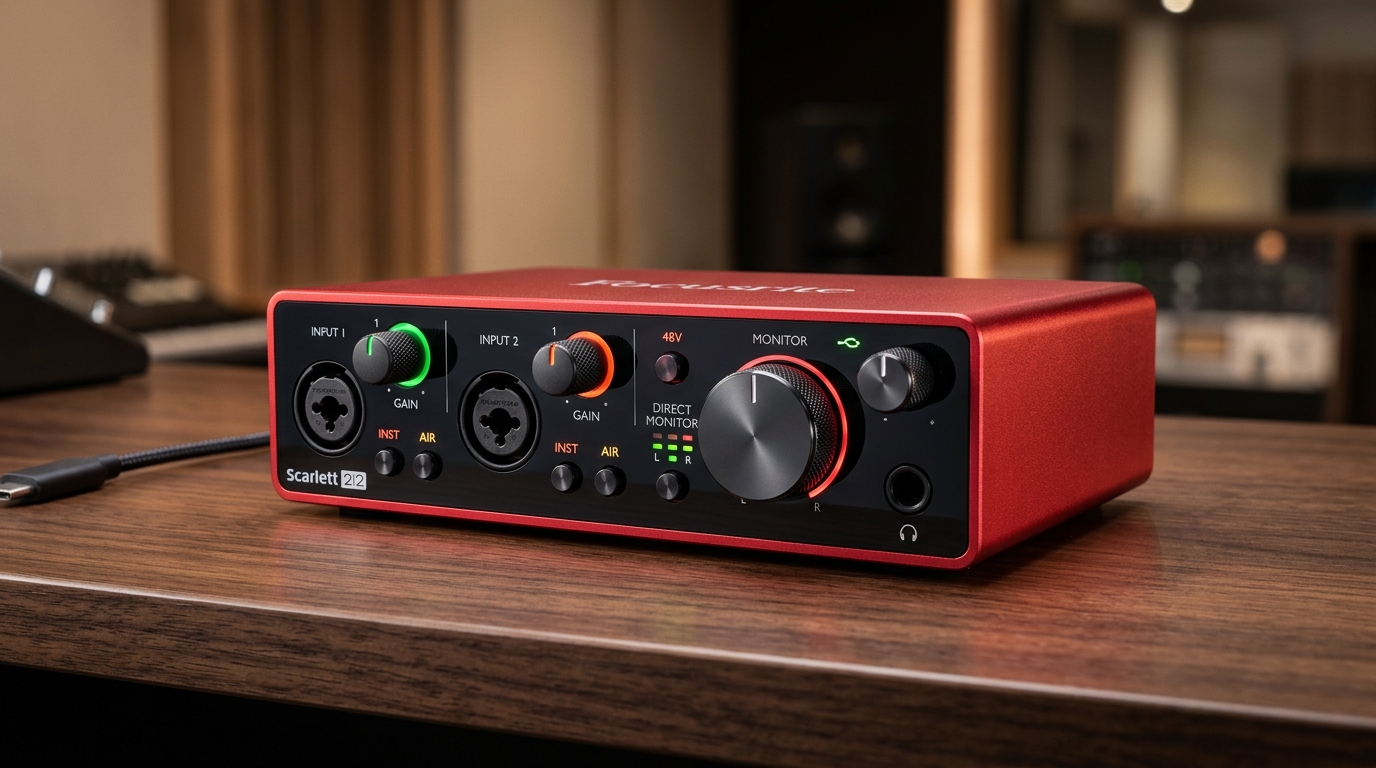
Focusrite Scarlett 2i2 (4th Gen)
The global studio benchmark remastered. Features 69dB of ultra-clean analog gain, studio-grade 120dB dynamic range converters from Focusrite’s flagship RedNet line, Auto Gain calibration, and re-engineered analog Air Mode with Harmonic Drive.
- 69 dB ultra-clean analog mic gain range
- 24-bit / 192 kHz studio audio resolution
- Dual XLR/TRS combination inputs with Hi-Z instrument mode
- Auto Gain & Clip Safe real-time hardware monitoring
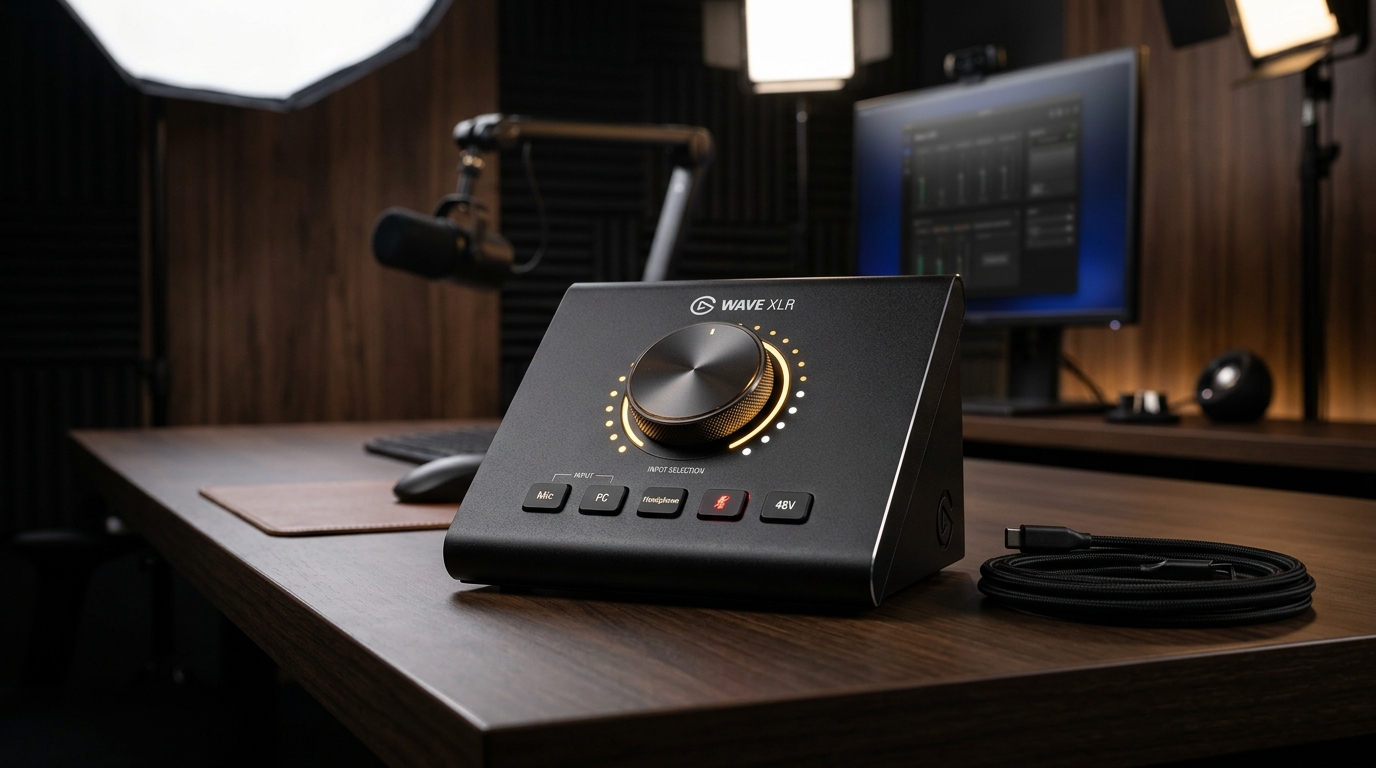
Elgato Wave XLR
The compact broadcast command center. Delivers an astonishing 75dB of ultra-low-noise gain, capacitive tap-to-mute, proprietary Clipguard anti-distortion circuitry, and seamless sub-mix routing via Wave Link software and Elgato Stream Deck.
- 75 dB ultra-low-noise gain (drives Shure SM7B natively)
- Capacitive silent tap-to-mute sensor on top
- Proprietary dual-stage Clipguard hardware limiter
- Wave Link digital sub-mixing software & Stream Deck ecosystem
Preamp Gain Benchmarks: Driving Gain-Hungry Mics Without a Cloudlifter
For years, the universal rule of dynamic broadcast microphones—most notoriously the legendary Shure SM7B—was that you could not connect them directly to an entry-level USB interface without purchasing a $150 inline preamp booster like a Cloudlifter CL-1 or FetHead. Low-gain interfaces (like previous Scarlett 2nd and 3rd Generation boxes with only 56dB of gain) forced users to crank input knobs to 100%, inducing audible hiss, noise floors, and thin vocal reproduction.
Both the Focusrite Scarlett 2i2 4th Gen and the Elgato Wave XLR definitively solve this problem, but they execute it with differing hardware power:
- Focusrite Scarlett 2i2 (4th Gen) — 69 dB Gain Range: Focusrite completely overhauled their preamps for the 4th Generation. With 69dB of ultra-clean gain, the 2i2 drives the Shure SM7B, Electro-Voice RE20, and Heil PR40 comfortably around 65% to 75% on the dial, retaining a pristine -127dBu EIN (Equivalent Input Noise) floor with ample headroom for dynamic vocal peaks.
- Elgato Wave XLR — 75 dB Gain Range: Elgato engineered the Wave XLR specifically with broadcast dynamics in mind. Offering a massive 75dB of gain, it is one of the most powerful single-knob preamps on the commercial market under $200. Even the quietest speakers can drive low-sensitivity broadcast microphones without external hardware boosters.
💡 Field Engineering Verdict on Preamp Power
If your primary reason for choosing between these two is raw clean gain to power a Shure SM7B or Rode PodMic, both interfaces completely eliminate the need for a Cloudlifter. The Elgato provides slightly more headroom (+6dB), while the Scarlett delivers marginally richer harmonic detail through its discrete 120dB RedNet converters.
Form Factor, Ergonomics & Daily Desk Experience
Where these two interfaces diverge most dramatically is how they interact with your physical workspace during daily production calls:
1. Elgato Wave XLR: The Slanted Desktop Master
The Wave XLR is designed specifically as an ergonomic desktop console. Its angled wedge form factor faces directly toward you, featuring a giant multifunctional rotary dial surrounded by customizable LED indicator rings. You can toggle between mic gain, headphone monitoring volume, and mic/PC audio crossfade with a single click of the knob.
Most importantly for business professionals in back-to-back Zoom, Google Meet, or Microsoft Teams sessions, the Wave XLR features a capacitive silent tap-to-mute sensor on the top surface. You do not have to click a mechanical switch or scramble for your mouse to mute your microphone—a simple tap silently mutes the feed, instantly illuminating the LED ring bright red.
2. Focusrite Scarlett 2i2: The Precision Rack Heritage
The Scarlett 2i2 4th Gen maintains the classic studio rack box footprint. Finished in stunning metallic red anodized aluminum, it features physical front-panel knobs with dynamic halo LED gain meters that glow green, amber, or red depending on signal levels. While it lacks a tap-to-mute touch surface, it offers dedicated physical buttons for Auto Gain (which listens to your voice for 10 seconds and automatically dials in ideal gain) and Clip Safe (which monitors audio 96,000 times per second and automatically pulls back preamp gain if you shout or laugh loudly).
Software Ecosystems: Wave Link vs Focusrite Control 2
Your software routing requirements will likely be the ultimate deciding factor between these two units:
Wave Link: The Unfair Advantage for Streamers and Meetings
The Elgato Wave XLR is powered by **Wave Link**, one of the most sophisticated virtual audio mixers ever created for Windows and macOS. Wave Link allows you to separate up to 9 distinct audio channels (e.g., Microphone, Spotify, Discord, Browser, Zoom, System Sounds) and create two completely independent sub-mixes:
- Monitor Mix: What you hear in your headphones.
- Stream/Output Mix: What your audience or meeting participants hear in Zoom, Google Meet, or OBS.
When paired with an Elgato Stream Deck, you gain physical tactile faders on your desk to mute individual apps, adjust Discord volume on the fly, and apply VST3 audio plugins (like Elgato Noise Removal powered by NVIDIA Broadcast) with zero latency.
Focusrite Control 2 & Analog Air Mode: The Audiophile Standard
Focusrite Control 2 focuses on pure signal path integrity. The headline software feature of the 4th Gen is **Air Mode**, which has been redesigned with two distinct circuits:
- Presence Boost: Gently lifts frequencies above 4kHz to ensure vocals cut through a meeting or podcast mix without harsh sibilance.
- Harmonic Drive: Emulates the saturation and warm coloration of vintage Focusrite studio consoles, adding weight, richness, and analog punch to spoken voice recordings.
Silo Interlinking & Complementary Studio Hardware
An audio interface is the brain of your desk audio, but it requires the right peripheral ecosystem to shine:
- Dynamic XLR Microphones: See our comprehensive shootouts on Shure MV7+ vs Rode PodMic USB and our pillar guide on Best Broadcast USB & XLR Microphones for Remote Work.
- Desk Macro Control: Pair the Wave XLR with a dedicated controller by exploring our comparison on Elgato Stream Deck MK2 vs Loupedeck Live S.
- Studio Desk Stability: Ensure your heavy boom arms and mic clamps do not transfer keyboard wobble by checking our dual-motor test on FlexiSpot E7 Pro vs UPLIFT V2 Standing Desks.
The Final Verdict: Which Audio Interface Should You Buy?
Buy the Elgato Wave XLR If:
- You are a solo creator, executive, or remote professional using a single XLR microphone.
- You want silent, immediate tap-to-mute directly on your desk for Zoom & Teams calls.
- You want virtual audio routing (Wave Link) to split game/browser/voice audio for OBS or streams.
- You already own or plan to purchase an Elgato Stream Deck for full desk automation.
Buy the Focusrite Scarlett 2i2 4th Gen If:
- You need two microphone inputs for in-person co-hosts, guest interviews, or instruments.
- You prioritize reference-grade 192kHz audio converters and analog Harmonic Air Mode.
- You produce music, record acoustic/electric guitars, or use professional digital audio workstations (DAWs).
- You want automated hardware calibration with Focusrite Auto Gain and Clip Safe.