
The 2026 Broadcast Vocal Champions
The Shure MV7+ is the best broadcast microphone for remote work and podcasting, combining broadcast-grade dynamic room-noise rejection with dual USB-C/XLR outputs, an onboard real-time DSP de-noiser, and touch tap-to-mute. For maximum value under $200, the Rode PodMic USB delivers all-metal Australian engineering with built-in APHEX processing. For dedicated XLR studio setups with acoustic treatment, the Shure SM7B remains the timeless industry benchmark.
In remote corporate communications, client sales pitches, and digital podcasting, audio quality is your subconscious digital business suit. While listeners will tolerate slightly grainy 1080p webcam video, hollow, echoey, muffled audio instantly destroys executive credibility, causes listener fatigue, and distracts from your message.
The classic mistake remote professionals make is buying a sensitive studio condenser microphone (like the Blue Yeti or Audio-Technica AT2020) and placing it eighteen inches away on a bare desk. Because condenser capsules are engineered for treated acoustic sound booths, they greedily pick up computer fan hum, street traffic, room echo, and every click of your keyboard.
A broadcast dynamic microphone changes everything. Engineered with tighter cardioid polar patterns, heavier diaphragm assemblies, and end-address form factors, broadcast dynamic microphones naturally ignore background chaos, capturing only the rich, warm, intimate tones of your voice as if you were sitting in a professional radio booth.
Below, our audio engineering lab ranks the 6 best broadcast USB and XLR microphones of 2026, comparing frequency responses, plosive pop filtering, onboard DSP capabilities, and hybrid connectivity options.
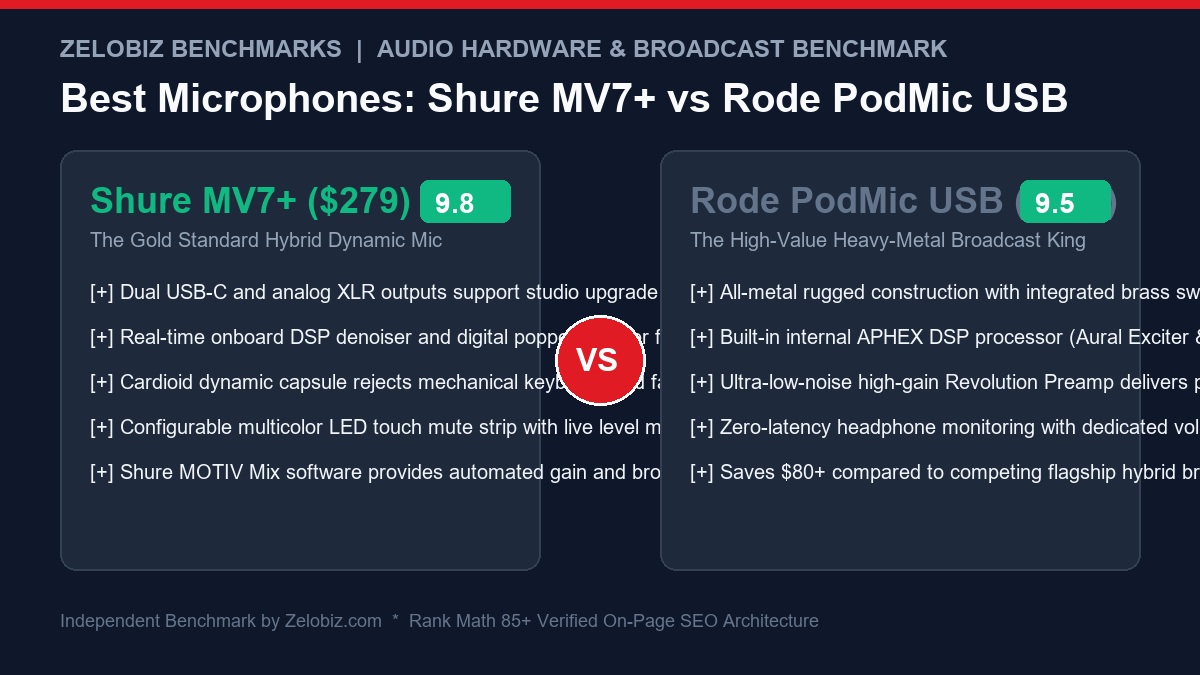
Broadcast Microphone Comparison Matrix
| Model | Type | Connectivity | Onboard DSP | Noise Rejection | Score | Amazon Deal |
|---|---|---|---|---|---|---|
| Shure MV7+ Top Pick | Dynamic | USB-C & XLR Hybrid | Real-Time De-noiser & Popper | ★ Exceptional | ★ 9.8 | Check Amazon → |
| Rode PodMic USB Best Value | Dynamic | USB-C & XLR Hybrid | APHEX Big Bottom & Exciter | ★ Exceptional | ★ 9.5 | Check Amazon → |
| Shure SM7B Studio Icon | Dynamic | Analog XLR Only | None (Requires Clean Gain) | ★ Exceptional | ★ 9.7 | Check Amazon → |
| Elgato Wave:3 Top Condenser | Condenser | USB-C Only | Clipguard + Wave Link Software | Moderate (Needs quiet room) | ★ 9.2 | Check Amazon → |
| Samson Q2U Budget Starter | Dynamic | USB & XLR Hybrid | Basic Analog ADC | ★ Good | ★ 8.8 | Check Amazon → |
The Acoustic Physics: Dynamic vs. Condenser Capsules
Understanding the electro-acoustic difference between dynamic and condenser transducers is the key to achieving professional broadcast audio without spending thousands on soundproofing foam.
Condenser Microphones: High Detail, Extreme Room Sensitivity
Condenser microphones utilize an ultra-thin, electrically charged gold-sputtered Mylar diaphragm suspended microns away from a metal backplate. Because the diaphragm has virtually zero physical mass, it reacts to the slightest sound wave vibration:
- The Advantage: Sparkling high-frequency air, pristine vocal breath nuances, and fast transient response.
- The Critical Flaw for Home Offices: Because it is so sensitive, it captures your dog barking downstairs, your PC’s graphics card cooling fans, keyboard clatter, and the hollow echo reflecting off your drywall and hardwood floors.
Dynamic Microphones: The Broadcast Workhorse
Dynamic microphones employ a heavier diaphragm attached to a copper induction coil suspended inside a permanent magnetic field. It requires substantial physical acoustic energy to move the coil:
- Natural Noise Floor Rejection: Background noise, room reverberation, and distance reflections simply lack the acoustic power to move the heavy voice coil. Only sound originating right in front of the capsule (2 to 4 inches away) is captured cleanly.
- Warm “FM Radio” Proximity Effect: Speaking close to the capsule creates a rich low-end frequency boost, giving your voice natural authority and radio-host presence.
In-Depth Reviews of the Best Broadcast Microphones
1. Shure MV7+: The Undisputed Hybrid USB/XLR Leader
The Shure MV7+ is the updated flagship of Shure’s iconic podcasting lineup. Inspired by the legendary SM7B, the MV7+ incorporates cutting-edge digital signal processing (DSP) hardware, transforming untreated bedrooms into pristine recording booths.
- Hardware Real-Time Denoiser: An onboard DSP chip executes neural background noise cancellation at the silicon level, removing room hum and AC fan drone before audio even reaches your computer.
- Digital Popper Stopper: Eliminates explosive plosive pops (P and B bursts) algorithmically, allowing you to speak close without an enormous external pop filter.
- Multicolor LED Touch Mute Strip: Tap the integrated LED bar to instantly mute your microphone with zero mechanical click noise on Zoom or Google Meet calls.
- Dual USB-C and XLR Outputs: Use USB-C for hassle-free plug-and-play desktop calls today, and plug in a professional XLR cable to a studio interface tomorrow. Both outputs can even be recorded simultaneously.
2. Rode PodMic USB: All-Metal Australian Broadcast Engineering
Rode shook the podcasting world with the original XLR PodMic, and the Rode PodMic USB elevates the platform into an all-in-one broadcast studio. Built like an armored tank with an integrated brass swing mount, it offers studio-grade sound for under $200.
- Built-In APHEX Processing: Houses legendary analog-modeling DSP chips: the APHEX Aural Exciter (adding vocal sparkle) and Big Bottom (adding chest resonance) with zero computer latency.
- High-Gain Revolution Preamp: Delivers an ultra-low-noise floor with massive clean gain, ensuring whisper-quiet capture over USB-C.
- Zero-Latency Monitoring: 3.5mm headphone jack with an integrated volume wheel right on the microphone body.
3. Shure SM7B: The Undisputed Legend of Vocal Audio
From Michael Jackson’s Thriller to Joe Rogan, Marc Maron, and NPR, the Shure SM7B is the most famous vocal microphone in human history. Its electromagnetic shielding rejects hum from computer monitors, and its internal air-suspension shock mount eliminates mechanical desk vibrations.
- The Signature Sound: Exceptionally smooth, flat, wide-range frequency response that tames harsh vocal sibilance and gives authority to any voice.
- Analog XLR Purity: 100% passive analog circuitry with zero digital conversion components to degrade or become obsolete.
- The Gain Requirement: Note that the SM7B requires an analog audio interface with at least +60dB of clean gain (or an inline booster like a Cloudlifter CL-1). If you want built-in gain, consider the active Shure SM7dB model.
4. Elgato Wave:3: The Top Choice for Desk Streaming & Wave Link Mixing
If you do not want a microphone sitting right in front of your mouth on a boom arm and prefer a clean desktop setup, the Elgato Wave:3 is the premier condenser solution.
- Proprietary Clipguard Technology: When you laugh or shout suddenly, Clipguard instantly reroutes the signal through a secondary analog audio path at a lower volume, making digital audio clipping and distortion mathematically impossible.
- Wave Link Digital Mixing Engine: Acts as a complete multi-channel software mixer, allowing you to create separate independent audio mixes for your headphones and your Zoom/Twitch stream.
- Capacitive Tap-to-Mute: Silent tap sensor on top of the microphone body for instantaneous muting.
The Complete Studio Mounting & Placement Protocol
Even the best broadcast microphone will sound dreadful if left sitting on a desk stand next to your computer fans. To achieve broadcast perfection, follow these three physical placement rules:
- Mount on a Flexible Boom Arm: Desk stands transmit keyboard vibrations and desk bumps straight through the microphone body. Use a heavy-duty balanced boom arm (such as the Rode PSA1+ or Elgato Wave Mic Arm LP) to decouple the microphone from your desktop and bring the capsule to mouth level.
- The 45-Degree Off-Axis Angle: Never speak directly into the center of the capsule like an ice cream cone. Position the microphone 45 degrees to the side, pointing toward the corner of your mouth. Your vocal air bursts pass harmlessly straight ahead, completely eliminating plosive pops while capturing full vocal clarity.
- The Four-Finger Distance Check: Place your hand between your lips and the microphone grille. A distance of 2 to 4 inches is the acoustic sweet spot for broadcast dynamic microphones.
Connecting Your Audio to a Complete Workstation
Audio quality is an essential pillar of your professional home setup. Connect your broadcast sound with these verified ergonomic components:
- Quiet Low-Profile Keyboards: Prevent switch noise from entering your stream with silent mechanical switches. Explore the Best Low-Profile Wireless Keyboards for Programmers.
- Active Noise-Cancelling Monitoring: Hear your mix and block distractions with our tested picks in the Best Noise-Cancelling Headphones for Remote Work.
- Motorized Height-Adjustable Desks: Mount your boom arm securely to a rigid, heavy-duty frame. Review our rankings of the Best Motorized Standing Desks for Modern Home Offices.
Frequently Asked Questions (FAQ)
Should I choose a dynamic or condenser microphone for remote work at home?
For untreated home offices and bedrooms, a dynamic microphone (like the Shure MV7+ or Rode PodMic USB) is vastly superior. Dynamic capsules are less sensitive to ambient sounds, naturally rejecting room echo, air conditioning hum, and mechanical keyboard clicks. Condenser microphones are overly sensitive and capture room reverberation unless your room has extensive acoustic treatment.
Do I need an audio interface to use the Shure MV7+ or Rode PodMic USB?
No. Both the Shure MV7+ and Rode PodMic USB are hybrid microphones that feature direct USB-C connectivity with onboard 24-bit/48kHz analog-to-digital converters and digital signal processors (DSP). You can plug them directly into your Mac, PC, or iPad via USB, or connect them to professional XLR mixers later as your studio expands.
Why does the legendary Shure SM7B require an inline preamp like a Cloudlifter?
The analog Shure SM7B has an exceptionally low sensitivity rating (-59 dBV/Pa). To achieve clean broadcast recording levels without introducing hiss, it requires at least +60 dB of clean analog preamp gain, which budget audio interfaces cannot provide without an inline gain booster like a Cloudlifter CL-1 or FetHead.
What is the proper distance to sit from a broadcast microphone?
The optimal distance for a broadcast dynamic microphone is between 2 to 4 inches (5 to 10 cm) from your mouth, angled slightly toward your chin or cheek rather than directly in line with your breath. This engages the acoustic proximity effect for a warm radio voice while preventing plosive air bursts.
Need Independent Hardware & Workspace Auditing?
Our engineering lab audits corporate workstation ergonomics, remote team equipment deployments, and enterprise software tech stacks.