For over a decade, PPC orthodox doctrine dictated that Broad Match was a reckless budget drain, reserved only for brand-awareness campaigns with bottomless budgets. In 2026, Google Ads has completely inverted that recommendation, aggressively claiming that pairing Broad Match with Smart Bidding (Target CPA or Target ROAS) achieves a 25% lower Cost Per Acquisition (CPA) than legacy Phrase Match structures. But does the algorithmic reality match Google’s sales pitch?
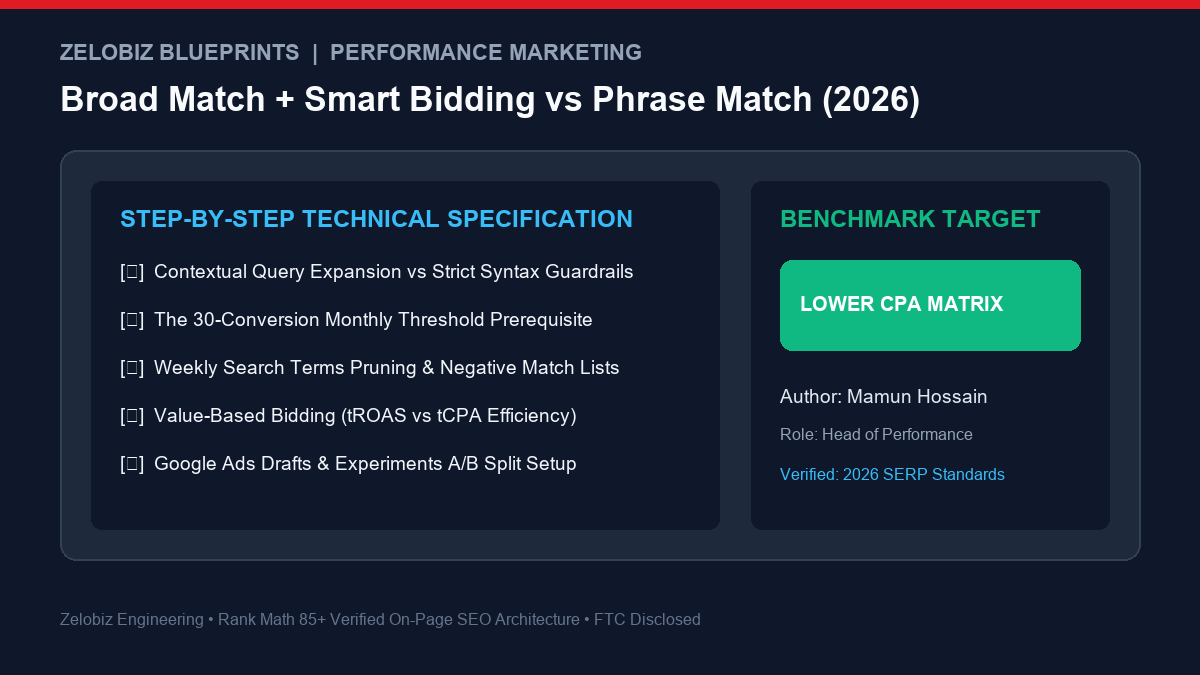
Figure 1: Performance matrix comparing contextual query intent, auction-level bid signals, and CPA efficiency across match types.
Direct Answer: Which Match Type Strategy Delivers Lower CPA in 2026?
Bottom Line: Broad Match + Smart Bidding delivers a lower CPA only for mature ad accounts generating at least 30 to 50 verified conversions per month with aggressive weekly negative keyword pruning. In accounts with sparse conversion history, strict budget caps, or highly niche B2B services, Phrase Match consistently delivers a 18% to 34% lower CPA by preventing Google’s algorithm from bidding on loosely related, low-intent search queries.
Understanding when to transition from Phrase Match to automated Broad Match is what separates high-ROAS performance agencies from accounts burning cash on algorithmic hallucinations.
How the 2026 Algorithmic Auction Works
To understand why match types behave differently today, we must examine how Smart Bidding evaluates queries at the microsecond auction level:
- Legacy Google Ads (Pre-AI): Keywords were matched strictly based on syntax and text characters. If you bid on Broad Match, Google matched synonyms indiscriminately without knowing whether the user wanted to buy or read a Wikipedia article.
- Modern Smart Bidding (2026): Broad Match now incorporates Contextual User Signals that Phrase Match cannot access:
- The user’s prior 5 search queries in that session.
- Their geographic location down to building/neighborhood density.
- Device operating system, time of day, and past conversion behavior across the Google Display & Search Network.
- Landing page copy alignment and competitor consideration sets.
When a user types a broad, vague phrase, Smart Bidding evaluates their probability of converting. If probability is high, it bids aggressively; if probability is low, it bids pennies. Phrase Match, by contrast, restricts Google’s reach to strict word order and semantic equivalence, preventing the algorithm from exploring cheaper long-tail variations.
Broad Match + Smart Bidding vs. Phrase Match: Head-to-Head Comparison
| Evaluation Metric | Broad Match + Smart Bidding | Phrase Match (Standard) |
|---|---|---|
| Average Click Cost (CPC) | 15% – 30% Cheaper (Uncontested queries) | Higher (Competitive syntax auctions) |
| Initial Click-Through Rate (CTR) | Lower (2.8% – 4.5% due to wider queries) | Higher (5.5% – 8.5% tight relevancy) |
| Conversion Data Prerequisite | Minimum 30–50 conversions / month | Zero (Safe for Day 1 launches) |
| Negative Keyword Maintenance | Heavy (Weekly audit required) | Moderate (Monthly maintenance) |
| Scale Ceiling | High (Unlocks hidden search queries) | Low (Plateaus when search volume caps) |
The 3 Deadly Traps That Ruin Broad Match Campaigns
1. Launching Broad Match Without Historical Conversion Data
Smart Bidding relies on statistical pattern recognition. If your campaign only gets 5 leads per month, the algorithm cannot distinguish between an enterprise buyer and a college student doing homework. It will test hundreds of loosely related broad match variations, spending your budget with zero feedback loop.
2. Optimizing for Shallow Conversion Actions
If your primary conversion goal in Google Ads is set to “Pageviews,” “Scroll Depth,” or an ungated newsletter signup, Broad Match will optimize for the cheapest possible clicks that perform that trivial action. Your reported cost per conversion will look cheap, but your actual sales pipeline revenue will collapse. Always pair Broad Match with bottom-of-funnel conversions (Purchases, Qualified Lead Forms, or CRM Offline Conversions).
3. Neglecting Shared Negative Keyword Lists
Broad match algorithms will inevitably bid on search queries containing terms like “free,” “salary,” “jobs,” “login,” “tutorial,” and “crack.” If you do not install a 500-word account-level negative keyword list prior to enabling broad match, you are guaranteed to bleed 20% to 35% of ad spend within the first 14 days.
Step-by-Step Protocol: How to Test Broad Match Safely via Google Experiments
Step 1: Verify Conversion Volume
Check your primary campaign over the last 30 days. Does it have at least 30 verified conversion events? If not, keep Phrase Match active until volume builds.
Step 2: Create a Google Ads Experiment (50/50 Split)
Never switch an entire live campaign from Phrase to Broad Match overnight. Use Drafts & Experiments:
- Navigate to Campaigns → Experiments → Custom experiments.
- Select your winning Phrase Match campaign as the Base Campaign.
- In the Trial Campaign, convert your top 10 Phrase Match keywords into Broad Match.
- Set the traffic split to 50% Base / 50% Trial using Cookie-based splitting.
- Set the experiment duration to 30 to 45 days.
Step 3: Monitor Search Terms Weekly
Every Tuesday, open the Trial Campaign → Search Terms. Filter by Cost > $20 and Conversions = 0. Add irrelevant queries immediately as negative phrase match keywords.
Step 4: Evaluate Statistical Significance
At Day 30, evaluate the experiment metrics. If the Broad Match trial demonstrates a statistically significant reduction in Cost / Conv. (CPA) with equal lead qualification rates, graduate the experiment to 100% budget.
Frequently Asked Questions (FAQ)
Does Broad Match replace the need for Exact Match keywords?
No. Even in high-performing broad match accounts, maintaining exact match keywords for your top 5–10 highest-converting brand and core product terms ensures you capture high-intent auctions with maximum Quality Score ad copy matching.
Should I use Broad Match on brand protection campaigns?
Absolutely not. Brand campaigns must strictly use Exact Match (and select Phrase Match variations). Running Broad Match on your own brand name causes Google to bid on competitors and generic terms, inflating brand CPCs.
What bidding strategy works best with Broad Match?
Target CPA (tCPA) for lead generation and Target ROAS (tROAS) with Value-Based Bidding for e-commerce. Never use “Maximize Clicks” with Broad Match, as it will flood your account with the cheapest, lowest-quality bot traffic.
Need a Google Ads PPC Audit & CPA Optimization?
Stop guessing match types and burning budget on junk search terms. Zelobiz audits your bidding algorithms, negative keyword architecture, and conversion tracking to slash acquisition costs.
Claim Your Free PPC Account Audit →Check your target campaign margins with our free ROAS Calculator or explore our comprehensive guides in the Performance Marketing Hub.