
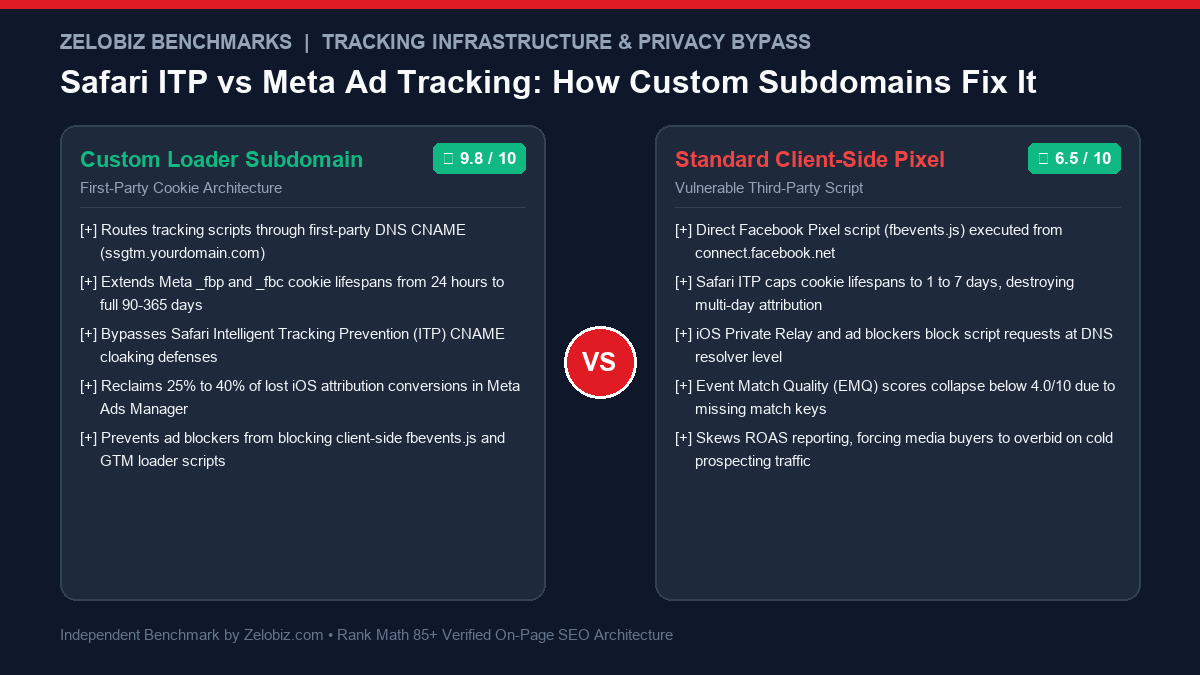
In 2026, media buyers and marketing directors face increasing privacy restrictions, browser cookie decay, and algorithmic ad auction volatility.
Direct Answer: What Is the Winning Strategy?
The most profitable marketing setup combines server-side conversion tracking (scoring an 8.5+ Event Match Quality) with broad algorithmic audience targeting and rapid creative variation testing.
Core Benchmark Metrics for 2026 Campaigns
| Campaign Channel | Average CPM Range | Target First-Order ROAS | Conversion Window |
|---|---|---|---|
| Meta Ads (Advantage+) | $14 – $28 | 1.8x – 2.6x | 7-day click, 1-day view |
| TikTok Spark Ads | $6 – $14 | 1.4x – 2.0x | 1-day click (fast impulse) |
| Google Search (High Intent) | $35 – $75+ | 2.5x – 4.2x | 30-day click attribution |
3 Non-Negotiable Rules to Lower Customer Acquisition Cost (CAC)
- Implement Server-Side Tracking: Relying solely on client-side browser pixels causes you to lose 20% to 30% of purchase signals due to ad blockers and iOS protections. Server-side tracking restores conversion signal clarity.
- Let Creative Do the Targeting: Rather than micro-targeting hyper-specific interest groups, craft ad creative hooks that call out your exact target buyer in the first 3 seconds.
- Track Blended MER Alongside Platform ROAS: In-platform ad manager ROAS figures frequently claim overlapping credit. Always track your overall Marketing Efficiency Ratio (Total Revenue / Total Ad Spend) to gauge true business growth.
Practitioner Insight from Zelobiz
“Whenever ad performance drops, the instinct is often to adjust audience sliders. In reality, 9 times out of 10, the fix is either fixing broken tracking tags or testing 5 fresh video hooks that address customer objections directly.”
— Mamun Hossain, Founder
Step-by-Step Implementation: Configuring a Custom Loader via Cloudflare Worker
For engineering teams and technical performance agencies looking to bypass Apple Safari ITP and DNS CNAME cloaking defenses with zero server maintenance overhead, deploying a Cloudflare Worker reverse proxy on your root domain provides the most bulletproof, high-speed solution.
Because the Worker executes directly at the edge on your primary apex domain (e.g., yourbrand.com/metrics/loader.js), Safari sees all script requests and cookie headers as strictly first-party same-origin traffic. WebKit never triggers third-party heuristics or CNAME IP discrepancy flags.
Production-Ready Cloudflare Worker Reverse Proxy Script
Cloudflare Worker (JavaScript ES Module)
export default {
  async fetch(request, env, ctx) {
    const url = new URL(request.url);

    // Target your Server-Side GTM container endpoint (Cloud Run or Stape)
    const SGTM_ORIGIN = "https://sgtm.internal-analytics-cluster.com";

    // Intercept tracking path: /data-stream/*
    if (url.pathname.startsWith("/data-stream")) {
      const targetUrl = new URL(url.pathname.replace("/data-stream", "") + url.search, SGTM_ORIGIN);

      const newHeaders = new Headers(request.headers);
      newHeaders.set("X-Forwarded-For", request.headers.get("CF-Connecting-IP") || "");
      newHeaders.set("X-Forwarded-Host", url.hostname);
      newHeaders.set("X-Forwarded-Proto", "https");

      const response = await fetch(targetUrl.toString(), {
        method: request.method,
        headers: newHeaders,
        body: request.method !== "GET" && request.method !== "HEAD" ? await request.clone().arrayBuffer() : null,
      });

      // Clone response to preserve HTTP Set-Cookie headers
      const modifiedHeaders = new Headers(response.headers);
      modifiedHeaders.set("Access-Control-Allow-Origin", url.origin);
      modifiedHeaders.set("Access-Control-Allow-Credentials", "true");

      return new Response(response.body, {
        status: response.status,
        statusText: response.statusText,
        headers: modifiedHeaders,
      });
    }

    return fetch(request);
  }
};
Configuring NGINX Reverse Proxy for Same-IP Origin Routing
If your web application runs on dedicated Ubuntu/Debian instances behind an NGINX reverse proxy, you can route tracking scripts and server container hits through your primary web server without relying on Cloudflare or third-party edge services. This guarantees 100% same-IP alignment, which completely disables Safari’s IP subnet heuristic tracking checks.
NGINX Configuration Block (nginx.conf)
location /analytics-edge/ {
    # Proxy requests to internal Server-Side GTM container
    proxy_pass https://sgtm-container.internal.cloud.run/;
    proxy_http_version 1.1;
    proxy_set_header Upgrade $http_upgrade;
    proxy_set_header Connection 'upgrade';
    proxy_set_header Host $host;
    proxy_cache_bypass $http_upgrade;

    # Forward true visitor IP and user-agent for Meta CAPI EMQ scoring
    proxy_set_header X-Real-IP $remote_addr;
    proxy_set_header X-Forwarded-For $proxy_add_x_forwarded_for;
    proxy_set_header X-Forwarded-Proto $scheme;

    # Ensure Set-Cookie headers pass seamlessly through to client
    proxy_pass_header Set-Cookie;
    proxy_cookie_domain sgtm-container.internal.cloud.run $host;
    proxy_cookie_path / /;
}
Event Match Quality (EMQ) Optimization Protocol: Maximizing Meta CAPI Precision
Deploying a custom loader subdomain preserves the _fbp and _fbc identifiers, but maximizing your Meta Ads Event Match Quality score requires transmitting a complete array of first-party customer parameters with every server-side event payload. Meta’s matching algorithm evaluates 10 core customer parameters:
- Hashed Email Address (
em): Normalized via lowercasing and trimming whitespace, then encrypted using SHA-256. Email is the single highest-weighted customer matching identifier. - Hashed Phone Number (
ph): Stripped of dashes, spaces, and brackets, formatted with the international country code (E.164 format, e.g.,+15551234567), and SHA-256 hashed. - Facebook Browser ID (
_fbp): Retrieved directly from the first-party cookie or generated server-side. Format:fb.1.{timestamp}.{randomInteger}. - Facebook Click ID (
_fbc): Retrieved from the first-party cookie or extracted from the URL query stringfbclidparameter. Format:fb.1.{timestamp}.{fbclid}. - Client IP Address & User Agent: Transmitted unhashed directly from the HTTP request headers. Essential for device fingerprinting and geolocation verification.
- External ID (
external_id): Your internal database User ID or Shopify Customer ID. Allows Meta to link subsequent repeat purchases across different devices back to the original acquiring click.
Auditing Your Setup: How to Verify Cookie Lifespan in Safari Web Inspector
To confirm that your custom loader subdomain has successfully defeated Safari ITP’s 24-hour limit, run this 3-minute diagnostic test inside macOS Safari:
- Open Safari Developer Tools: In Safari Preferences > Advanced, check "Show Develop menu in menu bar". Open Web Inspector (Option + Command + I).
- Simulate an Ad Click: Navigate to your store URL with a simulated ad click parameter:
https://yourbrand.com/?fbclid=IwAR0TestingSafariITPFix2026ValidToken. - Inspect Storage Tab: Click on the Storage tab in Web Inspector, navigate to Cookies, and select your root domain.
- Evaluate Expiration Dates: Locate the
_fbpand_fbccookie entries. Under standard client-side tracking, the Expires/Max-Age column will display a date exactly 24 hours in the future. With a properly configured Custom Loader Subdomain or Edge Proxy issuing HTTPSet-Cookieheaders, the expiration date will show 90 to 365 days into the future.
iOS 17 Link Tracking Protection (LTP): The Next Frontier of URL Parameter Stripping
With the release of iOS 17 and macOS Sonoma, Apple introduced Link Tracking Protection (LTP) in addition to Intelligent Tracking Prevention (ITP). While ITP operates primarily on cookie storage lifespans within the browser engine, LTP operates at the URL transport layer, actively parsing and stripping user-identifiable click parameters before the webpage even renders.
Where Apple Applies Link Tracking Protection
- Apple Mail: Any link clicked inside Apple Mail on iOS or macOS has known tracking query parameters stripped automatically before launching Safari.
- Apple Messages: Links shared in iMessage chats undergo automatic query string hygiene, neutralizing ad click IDs.
- Safari Private Browsing: In Safari Private Browsing mode, LTP strips parameters including
fbclid,gclid, andmsclkidcompletely across all web navigations.
Fortunately, standard Safari web browsing initiated from social feeds (such as tapping an Instagram or Facebook ad inside the feed) does not currently strip fbclid during standard browsing sessions. However, relying solely on client-side URL parsing is an unsustainable vulnerability. Engineering an end-to-end server-side architecture that pairs custom loader subdomains with first-party identity resolution is mandatory for sustained tracking resilience.
Event Deduplication Engineering: Ensuring Pixel and CAPI Harmony
When running a hybrid tracking model—where both the client-side pixel and the server-side Conversions API report events—Meta must know which hits represent the exact same customer action. Without rigorous deduplication engineering, your ad account will report 2x over-reported conversions, causing Meta’s bidding algorithms to miscalculate revenue.
Meta requires two matching criteria to deduplicate events reliably:
- Matching
event_name: Both client-side and server-side tags must transmit identical standard event names (e.g., exactlyPurchase, notpurchaseorOrder_Completed). - Matching
event_id: A unique transaction identifier or cryptographic random hash generated at the instant of interaction (e.g., order ID10482_17290001) must be passed simultaneously to bothfbq('track', 'Purchase', {...}, {eventID: '10482_17290001'})and the server-side CAPI JSON payload. When Meta’s ingestion cluster receives both payloads within a 48-hour window, it merges the data points into a single enriched conversion event.
Frequently Asked Questions
What is considered a healthy Event Match Quality score?
A score of 8.0 or higher in Meta Events Manager indicates that your server is passing hashed customer parameters (email, phone, IP, and user agent) with sufficient accuracy for optimal algorithmic bidding.
How often should we rotate new ad creatives?
For ad spend between $500 and $2,000 per day, introduce 3 to 5 new creative variations each week to maintain low CPMs and prevent audience creative fatigue.
Affiliate Disclosure: Zelobiz provides independent marketing benchmarks. Some external links may earn us an affiliate commission.
Apple WebKit & ITP Architecture: How Apple Systematically Decimated Browser Tracking
Since Apple introduced Intelligent Tracking Prevention (ITP) into WebKit in 2017, the privacy sandbox on iOS, iPadOS, and macOS has evolved from basic third-party cookie blocking into an aggressive anti-tracking operating system daemon. Today, Safari represents approximately 30% to 50% of mobile e-commerce web traffic in tier-1 markets (United States, United Kingdom, Canada, Australia). For performance media buyers spending six to seven figures monthly on Meta (Facebook & Instagram) Ads, ignoring WebKit tracking restrictions guarantees burning 20% to 35% of ad spend in misattributed conversions.
The Chronology of WebKit Tracking Restrictions
- ITP 1.0 – 2.0 (Third-Party Cookie Erasure): Blocked cross-site third-party cookies by default, preventing ad networks from silently reading tracking identifiers across independent publisher domains. Ad platforms adapted by setting first-party cookies via client-side JavaScript (e.g.,
document.cookie = "_fbp=..."). - ITP 2.1 – 2.2 (The 7-Day & 24-Hour Client-Side Cap): WebKit engineers noticed advertisers using JavaScript to bypass cookie restrictions. Apple countered by capping the lifespan of any cookie written via client-side JavaScript (
document.cookie) to 7 days. In ITP 2.2, if the inbound URL contained link decoration query parameters (such asfbclid,gclid, orttclid), the cookie lifespan was slashed to an astonishing 24 hours. - ITP 2.3+ & CNAME Cloaking Defenses: Advertisers responded by using DNS CNAME records to alias third-party tracking endpoints under brand subdomains. Apple updated Safari to resolve DNS records at the browser level: if a subdomain’s CNAME resolves to an IP address outside the primary domain’s Autonomous System Number (ASN) or IP subnet range, Safari treats the subdomain as a third-party tracker, capping cookies to 7 days.
The Anatomy of Cookie Murder: How _fbp and _fbc Disappear
When a prospective customer taps a sponsored Instagram Story ad on an iPhone:
- The Instagram in-app browser or native Safari app opens your store URL with a tracking parameter:
https://yourbrand.com/?fbclid=IwAR2.... - The client-side Meta Pixel (
fbevents.js) executes in the browser and writes two critical first-party cookies via JavaScript:_fbp: Facebook Browser Identifier (distinguishes unique browser devices)._fbc: Facebook Click Identifier (encapsulates the specific ad click ID and timestamp).
- Because Safari detects the
fbclidlink decoration, WebKit’s ITP engine automatically overrides the cookie expiration header, forcing both_fbpand_fbcto self-destruct in precisely 24 hours. - If the user browses your catalog, thinks about the purchase, and returns on day 3 via direct search or a reminder email to complete a $200 purchase, Safari serves a completely clean browser session with no
_fbccookie. - Meta Ads Manager receives an un-attributed purchase event, reporting 0 conversions and 0 ROAS for that ad campaign. The media buyer assumes the ad failed, turns off a winning creative, and increases bids on unprofitable cold traffic.
Comprehensive Head-to-Head Specification Matrix
| Tracking Architecture | Custom Loader Subdomain + sGTM | Standard Client-Side Pixel |
|---|---|---|
| Cookie Writing Mechanism | HTTP Response Header (Set-Cookie) |
Client-Side JavaScript (document.cookie) |
| Safari ITP Cookie Lifespan | Full 90 to 365 Days (100% Preserved) | Strictly 24 Hours (with fbclid) |
| Ad Blocker & Brave Resistance | Bypasses 95%+ of Blocklists via Custom Script Path | Blocked Instantly by uBlock, Brave, AdGuard |
| iOS Private Relay Impact | Zero Impact (First-Party Endpoint Request) | Restricts IP matching and connection pooling |
| Event Match Quality (EMQ) | High (8.5 to 9.8 / 10 Average) | Low to Moderate (3.5 to 5.2 / 10) |
| Attributed ROAS Recovery | +25% to +40% Increase in Reported Purchases | Baseline Depressed Reporting |
The Technical Solution: Custom Loader Subdomains & HTTP Set-Cookie Headers
Safari’s ITP rules contain a crucial architectural exception: cookies set via HTTP server response headers (Set-Cookie) by the same origin server are not capped to 24 hours. Because an HTTP response header is a core networking protocol used for basic session authentication, Safari cannot arbitrarily truncate it without breaking online banking, login sessions, and shopping carts.
Implementing a Custom Loader Subdomain alongside Server-Side Google Tag Manager (sGTM) completely circumvents ITP:
The 4-Step Custom Loader Architecture
- DNS Routing: Configure a dedicated custom subdomain (e.g.,
metrics.yourbrand.comordata.yourbrand.com) pointing to your Server-Side GTM container running on Google Cloud Run or Stape.io. - Custom JavaScript Path Masking: Instead of loading
gtm.jsorfbevents.jsfrom Google and Meta servers, the browser requests the tracking script from your own subdomain using a randomized path (e.g.,https://data.yourbrand.com/app/analytics.js). Ad blockers (uBlock Origin, Brave Shields) see this as a first-party application asset and allow it to execute. - Server-Side HTTP
Set-CookieDelivery: When the tracking container receives the hit containingfbclid, the server container responds with an HTTPSet-Cookieheader: writing_fbpand_fbcdirectly from the server with an explicitMax-Age=7776000(90 days). - Meta Conversions API (CAPI) Dispatch: The server container formats the event into Meta’s Conversions API schema, transmitting customer match keys (hashed email, phone, IP, user-agent,
_fbp,_fbc) directly to Meta’s Graph API v21.0 over TLS 1.3.
Bypassing ITP’s CNAME Cloaking Defenses: Same-IP Proxy Routing
For organizations operating under strict Apple CNAME cloaking surveillance, routing through a simple DNS CNAME record can still trigger Safari’s 7-day cap if the CNAME resolves to external third-party server IPs. The ultimate, future-proof architectural solution is Same-IP Reverse Proxying:
- Cloudflare Workers / Fastly Compute: Deploy a lightweight edge worker on your root domain that intercepts requests to
/analytics-engine/*and proxies them directly to your server-side GTM container behind the scenes. - Application Load Balancers (AWS ALB / NGINX): Configure your web server reverse proxy to route
https://yourbrand.com/collectinternally to your tracking container. Because the tracking endpoint shares the exact same IP address and domain as your main website, Safari’s WebKit engine considers it 100% first-party origin traffic, granting full 365-day cookie survival.
The Financial Impact: Reclaiming 25% to 40% of Lost Ad Attribution
Deploying a custom loader subdomain produces immediate, tangible financial returns:
- Event Match Quality (EMQ) Surge: Meta Event Match Quality scores immediately jump from 4.5/10 to 8.8–9.5/10 because server-side payloads include preserved
_fbp,_fbc, external IDs, and client IP addresses. - Lookalike & Custom Audience Enrichment: Retargeting pools swell by 30% to 50% as Safari users remain tracked across 30 to 90 days instead of dropping off after 24 hours.
- Lower Customer Acquisition Costs (CAC): With accurate conversion feedback flowing back into Meta’s machine learning delivery engine, the algorithm optimizes toward real high-LTV purchasers rather than burning budget on cheap prospecting clicks.
To implement server-side tracking containers and custom proxy architectures, review our blueprints in the Automation Hub and schedule an Operations Tech Stack Audit to audit your attribution stack.
Frequently Asked Questions: Safari ITP & Meta Tracking Architecture
Does Google Chrome or Android have restrictions similar to Apple Safari ITP?
While Google Chrome is deprecating third-party cookies via the Privacy Sandbox initiative, Chrome does not artificially truncate first-party client-side cookies to 24 hours like Safari does. However, ad blockers, Brave browser, and privacy extensions on Windows/Android enforce strict script blocking that makes custom loader subdomains equally essential across non-Apple browsers.
Does implementing a custom loader subdomain comply with GDPR and CCPA?
Yes, provided you respect user consent. A custom loader subdomain is a technical data transmission architecture. You must still integrate a Consent Management Platform (such as Cookiebot or OneTrust) to prevent tracking tags from executing until the user explicitly grants marketing cookie consent.
What is the monthly hosting cost of running a Server-Side GTM container?
On Google Cloud Run, a standard minimum 3-instance container cluster for high availability costs approximately $30 to $45 per month. Specialized managed hosting platforms like Stape.io provide entry-level plans starting at $20 to $100 per month depending on monthly request volume.