
To start a YouTube channel, pick a specific, consistent niche and video format, plan your first 10-20 video ideas before publishing anything, invest in decent audio quality (it matters more than video quality for retaining viewers), and post on a consistent schedule. Monetization through the YouTube Partner Program requires 1,000 subscribers plus either 4,000 watch hours in the past 12 months or 10 million Shorts views in the past 90 days — know these thresholds going in, since they shape a realistic growth timeline.
The monetization thresholds, specifically
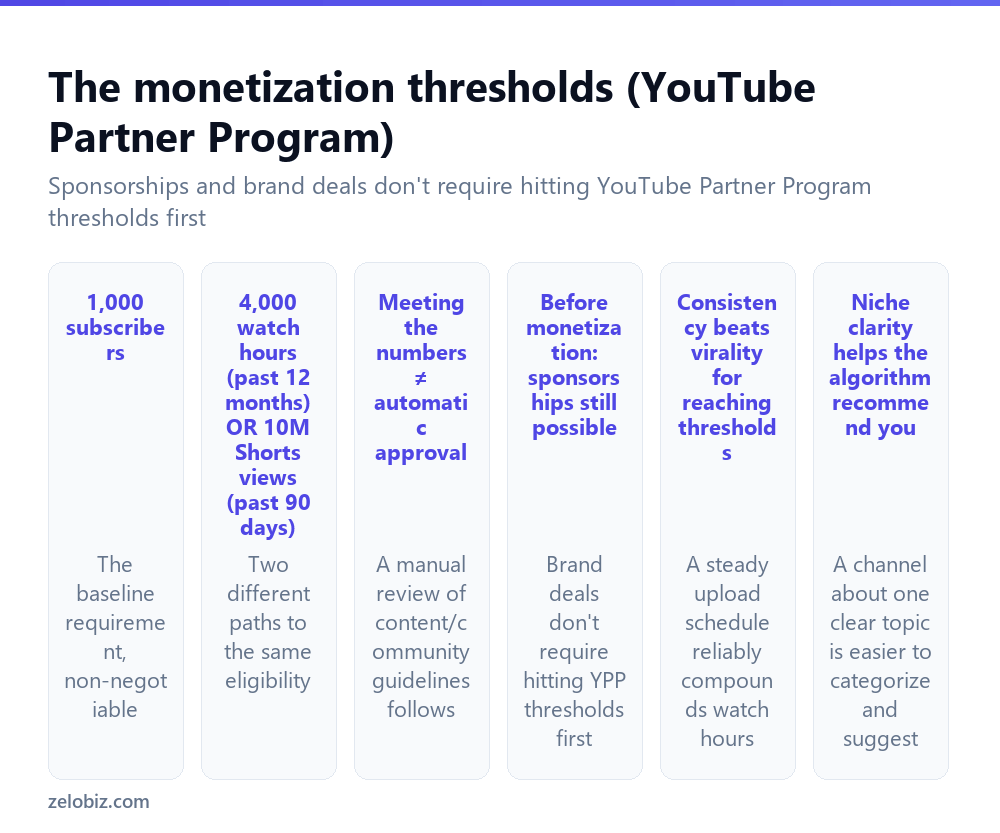
1,000 subscribers is the baseline, non-negotiable requirement for the YouTube Partner Program regardless of anything else.
Beyond that, two separate paths satisfy the watch-time requirement: 4,000 public watch hours in the past 12 months (the traditional long-form path), or 10 million Shorts views in the past 90 days (a newer path better suited to a Shorts-focused channel). Either path, combined with 1,000 subscribers, makes a channel eligible to apply.
Meeting these numbers doesn’t mean automatic approval — YouTube still conducts a manual review of the channel against its monetization and community guidelines policies before actually enabling ad revenue. Most channels genuinely built around real content pass this without issue, but it’s a real step, not a formality.
Sponsorships and brand deals don’t require hitting YouTube Partner Program thresholds at all — a smaller channel with a genuinely engaged, relevant audience can land sponsor deals well before reaching 1,000 subscribers, if the audience fit is right for a particular brand.
Choosing a niche and format
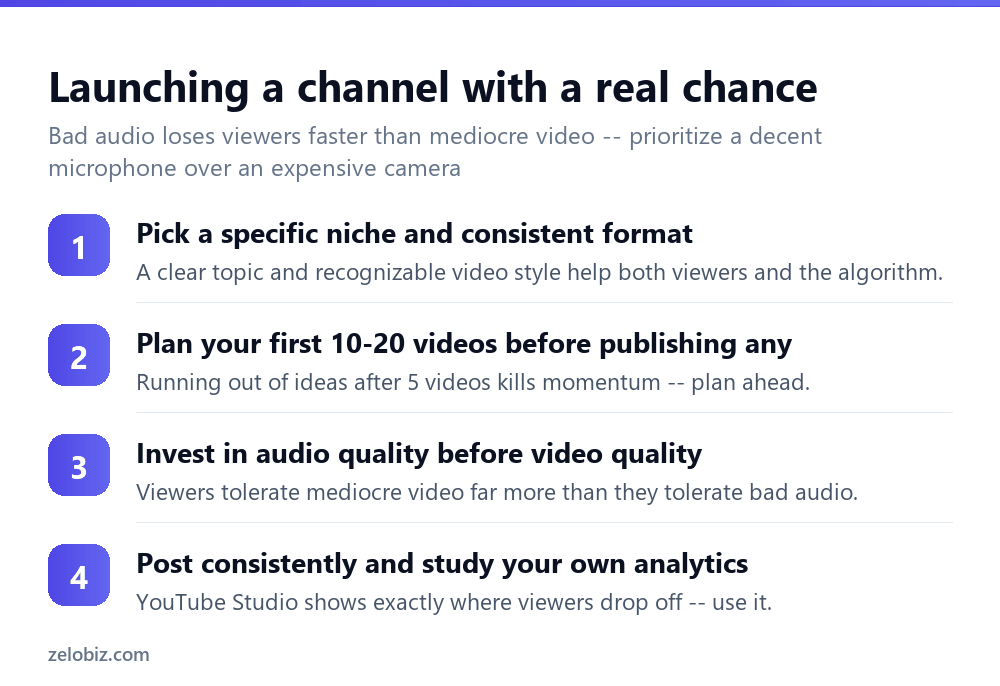
A channel covering one clear topic, in a recognizable, consistent format, is easier for both viewers to understand what to expect from and for YouTube’s recommendation system to categorize and suggest to interested viewers. A channel that jumps between unrelated topics — cooking one week, gaming the next, personal vlogs after that — confuses both.
Format consistency (a recurring intro style, a consistent video length range, a recognizable visual or editing style) helps build a recognizable identity faster than content variety does, especially in a channel’s early stages.
Planning content before publishing
A genuinely common failure mode: publishing the first 3-5 videos on initial enthusiasm, then running out of planned ideas and losing momentum right as the channel would otherwise be building an early audience.
Planning a real list of 10-20 video ideas before publishing the first one — not perfectly scripted, but at least a working list of topics — prevents that specific failure and keeps a consistent schedule achievable through the crucial early months.
Audio matters more than video quality
Viewers reliably tolerate mediocre video quality — a phone camera, imperfect lighting — far more than they tolerate poor audio. Muffled, echoey, or inconsistent audio is one of the fastest ways to lose a viewer within the first few seconds, regardless of how good the visual content is.
A dedicated external microphone, even an inexpensive one, is a better first equipment investment than an upgraded camera for almost every new channel — it addresses the more common actual reason viewers click away early.
Using YouTube Studio’s analytics
YouTube Studio’s Audience Retention graph, available for every published video, shows exactly where viewers drop off during a video — a sharp early dip in the first 15-30 seconds points at a weak opening hook; a gradual decline throughout suggests pacing or length issues rather than an opening problem specifically.
Reviewing this data honestly after each upload, rather than only checking view count or subscriber change, is what actually informs real improvement — it shows exactly which part of a video is losing people, not just whether the video performed well or poorly overall.
A realistic growth timeline
Most channels that eventually succeed took many months of consistent uploading before meaningful growth, and the majority of new channels never reach monetization thresholds at all — worth knowing honestly upfront rather than expecting rapid growth as the default outcome.
Consistency through the early, low-traction months — when view counts are genuinely discouraging — is what separates channels that eventually break through from ones that stop before ever finding real traction, more reliably than any single video going viral.
A worked example: the first month of a new channel
Say you’re launching a channel about budget home cooking, aiming for one video a week.
Before recording anything, write out 15-20 specific video titles — not just “cook some meals” but concrete ideas like “5 dinners under $5 a serving” or “what I actually eat on a $40 weekly grocery budget.” This list becomes the backlog that keeps the channel posting consistently well past the point initial enthusiasm alone would carry it.
For the first video, invest in a basic clip-on or USB microphone before worrying about camera quality — a phone camera in decent natural light is genuinely sufficient video quality to start with, but muffled or echoey audio recorded on a phone’s built-in mic will cost far more viewers than a slightly soft picture ever would.
After publishing, check Audience Retention on that first video a few days later. A steep drop in the first 15 seconds suggests the opening needs to get to the actual point faster, cutting any slow intro or lengthy greeting. A steadier decline across the whole video points more toward pacing or length rather than the opening specifically — two different problems requiring two different fixes, which is exactly why checking the actual data before revising the format matters more than guessing.
Shorts vs long-form: not necessarily an either-or choice
YouTube Shorts (short, vertical videos) and traditional long-form content serve different purposes and can work together rather than requiring a choice between them. Shorts can help a newer channel get discovered by a wider audience faster, given how YouTube’s Shorts feed surfaces content somewhat independently of subscriber count, while long-form content tends to build deeper viewer relationships and, for most niches, generates more ad revenue per view once a channel is monetized.
A practical approach for many new channels: use Shorts drawn from or teasing long-form content (a compelling clip, a quick tip that references a fuller video) to drive discovery, while the long-form videos remain the core content that builds a genuinely engaged, returning audience over time.
Channel art and first-impression basics
Beyond the videos themselves, a channel’s banner image, profile picture, and channel description all factor into whether a new visitor clicks subscribe after watching one video. These don’t need to be elaborate, but they should clearly communicate what the channel is about and post on — a visitor deciding whether to subscribe is often making that decision based on these elements alongside the one video that brought them there in the first place, not solely on the video content itself.
When a channel isn’t growing
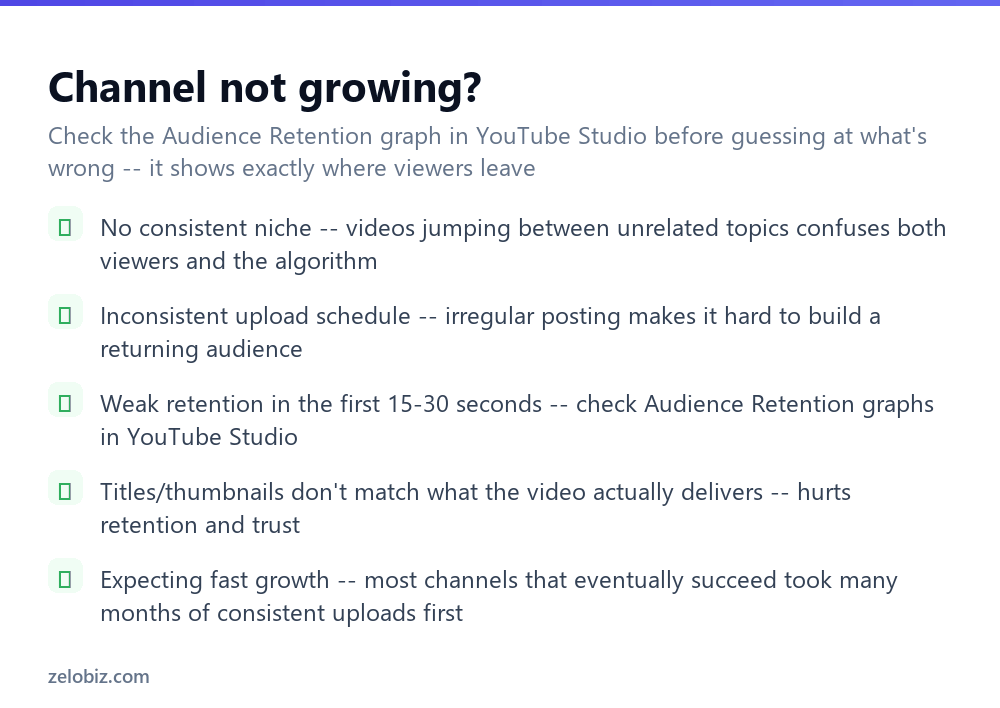
No consistent niche — videos jumping between unrelated topics makes it hard for both viewers and the algorithm to know what the channel is actually about.
Inconsistent upload schedule — irregular posting makes it genuinely harder to build a returning audience that knows when to expect new content.
Weak early retention — check the Audience Retention graph specifically for a sharp drop in the first 15-30 seconds, pointing at a weak opening hook needing revision.
Titles and thumbnails overpromising relative to what the video actually delivers — this hurts retention and audience trust even when it briefly boosts click-through rate.
- ✓Pick one clear niche and a consistent, recognizable format
- ✓Plan 10-20 video ideas before publishing the first one
- ✓Invest in decent audio before upgrading camera equipment
- ✓Review Audience Retention data honestly after every upload
- ✓Post consistently through the early low-traction months rather than stopping
- ✕Jumping between unrelated topics and confusing both viewers and the algorithm
- ✕Publishing the first few videos on enthusiasm with no plan for what comes next
- ✕Prioritizing an expensive camera over basic audio quality
- ✕Only checking view count or subscriber change instead of retention data
- ✕Expecting fast growth and quitting before the realistic timeline has played out
Frequently asked questions
What do I need to start a YouTube channel?
A Google account to create the channel, a specific niche and consistent format, a plan for your first 10-20 videos, and decent audio quality — more important early on than expensive camera equipment.
How many subscribers do I need to monetize a YouTube channel?
1,000 subscribers, plus either 4,000 watch hours in the past 12 months or 10 million Shorts views in the past 90 days, to become eligible for the YouTube Partner Program.
Does hitting the subscriber and watch hour thresholds guarantee monetization?
No. Meeting the numeric thresholds makes a channel eligible to apply, but YouTube still conducts a manual review against its guidelines before approving monetization.
Can I make money on YouTube before reaching the monetization thresholds?
Yes, through sponsorships and brand deals, which don’t require meeting YouTube Partner Program thresholds — only a relevant, engaged audience a brand wants to reach.
Why is my YouTube channel not growing?
Common causes include an inconsistent niche, irregular upload schedule, or weak retention in a video’s first 15-30 seconds — check Audience Retention data in YouTube Studio to diagnose which applies.
Is video or audio quality more important for a new YouTube channel?
Audio. Viewers tolerate mediocre video far more than poor audio, which is one of the fastest ways to lose a viewer in the first few seconds.
- →Pair video with written content: how to start a blog
- →Other realistic online income paths: how to make money online
- →Sell products to your growing audience: how to sell on Etsy
- →Build a home base for your content: how to make a website